



|
|
|
|
|
|
|
|
|
|
|


| . |  |
. |
|
|
|
 by Staff Writers Manila (AFP) Jan 3, 2010
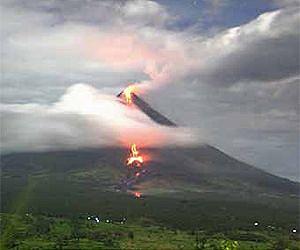
Disaster relief officials in the Philippines launched a massive clean-up on Sunday as tens of thousands of villagers began returning home after the restive Mayon volcano showed signs of calming down. Joey Salceda, governor of the province of Albay southeast of Manila where Mayon is located, said he expected all 29 public schools converted into temporary shelters would reopen for classes Monday. "What we are doing now is conducting damage assessment. We are on an early recovery stage," Salceda told reporters. "We are cleaning up schools and classrooms so that classes can resume tomorrow." He said firetrucks had been brought in to hose down sanitation facilities that were overwhelmed when more than 50,000 people were evacuated over the past three weeks for fear of a possible major eruption. "It's a massive clean up-operation," he said. Mayon began rumbling and spewing lava and ash in early December, leading authorities to declared a level-four alert out of a scale of five, meaning that a major hazardous eruption was about to take place. But Mayon has since shown signs it was calming down, and on Saturday the Philippine Institute of Volcanology and Seismology lowered the alert level to three. The provincial government said more than 46,000 people living some seven to eight kilometres (five miles) from Mayon, the country's most active volcano, had been given the green light to return home. But more than 3,000 others who live in a six-kilometre zone will have to remain in evacuation centres. "Right now we are not seeing a new rise of magma," chief volcanologist Renato Solidum said in a radio interview. However, he warned villagers returning to their farms on the foothills of Mayon to remain wary of lava flows or heavy rains that could dislodge volcanic debris from the slopes. An August 2006 eruption caused no immediate deaths but the following December a passing typhoon unleashed an avalanche of volcanic mud from the mountain's slopes that left 1,000 people dead. The 2,460-metre (8,070-foot) Mayon has erupted 48 times in recorded history. In 1814, more than 1,200 people were killed when lava flows buried the town of Cagsawa.
Related Links Bringing Order To A World Of Disasters When the Earth Quakes A world of storm and tempest
|
|
|
| The content herein, unless otherwise known to be public domain, are Copyright 1995-2014 - Space Media Network. AFP, UPI and IANS news wire stories are copyright Agence France-Presse, United Press International and Indo-Asia News Service. ESA Portal Reports are copyright European Space Agency. All NASA sourced material is public domain. Additional copyrights may apply in whole or part to other bona fide parties. Advertising does not imply endorsement,agreement or approval of any opinions, statements or information provided by Space Media Network on any Web page published or hosted by Space Media Network. Privacy Statement |
 del.icio.us
 Digg
Digg Reddit
 Google