


|
|
|
|
|
|
|
|
|
|
|


| . |  |
. |
|
|
|
 by Staff Writers El Cerrito CA (SPX) Nov 04, 2011
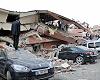
Details of an earthquake that rocked the largest city in the South Island of New Zealand in February 2011 may transform the way scientists assess the potential threat of fault lines that run through urban centers. According to a series of new papers published in Seismological Research Letters (SRL), scientists were surprised at the impact of the earthquake, which registered a relatively moderate magnitude 6.2. The in-depth review of the earthquake that killed more than 180 people and left thousands of homes uninhabitable in Christchurch represents an approach that the authors say should be applied to all earthquakes retrospectively. "The March 2011 Japan earthquake and tsunami overshadowed the Christchurch earthquake, which was absolutely devastating in its own right," said Jonathan M. Lees, editor-in-chief of SRL and professor of geosciences at the University of North Carolina at Chapel Hill. "Compared to the earthquake that destroyed much of Haiti, the scale of disaster in Christchurch may seem small," said Lees. "Christchurch, however, was constructed using much better technology and engineering practices, raising a very sobering alarm to other major, high density western urban centers." The Christchurch earthquake ruptured a previously unmapped fault, surprising many with strong ground motion far greater than previously observed or expected from a magnitude 6.2 seismic event. The SRL special issue features 19 original technical papers that cover different aspects of the 2011 Christchurch earthquake, including seismological, geodetic, geological and engineering perspectives. Erol Kalkan, a research structural engineer and manager of the National Strong Motion Network with the U.S. Geological Survey and guest editor of the issue, says the issue serves as "a stand-alone reference" on the Christchurch earthquake and is an example of what should be done for every major earthquake. The first eight papers of this issue focus on earthquake source modeling, fault stress variation and aftershock sequence. "This earthquake was remarkable on several counts," said Kalkan. "The ground motion was much larger than previously recorded, the high intensity of shaking was greater than expected, particularly for a moderate size earthquake, and the liquefaction-induced damage was extensive and severe within the Central Business District (CBD) of Christchurch." The earthquake was reported to be felt across the South Island and the lower and central North Island. The Christchurch earthquake was especially meaningful, say the authors, because it followed a larger quake that produced less damage and no deaths. The Feb. 22 earthquake was the strongest seismic event in a series of aftershocks following the magnitude 7.1 Darfield, New Zealand quake on Sept. 4, 2010. Both the Darfield and Christchurch earthquakes ruptured previously unmapped faults, but the corresponding damage was quite different, offering seismologists and engineers a unique opportunity to understand why the Christchurch earthquake proved so devastating. In this issue, eight papers focus on the observed structural and geotechnical damages associated with the strong ground motion shaking, comparing differing levels of soil liquefaction and the corresponding structural performance of buildings, lifeline structures and engineering systems. The authors collectively provide a detailed catalogue of damage to levees, bridges and multi-story buildings, including stark contrasts in damage due to differing levels of liquefaction. Much of Christchurch was formerly swampland, beach dune sand, estuaries and lagoons that were drained as the area was settled. Consequently, large areas beneath the city and its environs are characterized by loose silt, sand and gravel. Widespread liquefaction-induced damage within the CBD required 1000 buildings to be demolished, as detailed in a paper by Cubrinovski, et al. Three papers concentrate on recorded strong ground motions and their engineering implications. "Many urban areas are built over soft sediments and in valleys or over basins, for example the San Francisco Bay Area and Los Angeles Metropolitan," Kalkan said. "These are urban areas that sit atop geological features that may exaggerate or amplify ground motion, just as Christchurch experienced. The question is how to apply or account for such significant, higher-than-expected ground motions, as seen in Christchurch, when evaluating the design of existing and new structures." The Christchurch earthquake will have long-lasting, significant impact on engineering practices leading to profound changes in New Zealand's building code, says Kalkan, and on the understanding of amplified ground motion.
Related Links Seismological Society of America Bringing Order To A World Of Disasters When the Earth Quakes A world of storm and tempest
|
|
|
| The content herein, unless otherwise known to be public domain, are Copyright 1995-2014 - Space Media Network. AFP, UPI and IANS news wire stories are copyright Agence France-Presse, United Press International and Indo-Asia News Service. ESA Portal Reports are copyright European Space Agency. All NASA sourced material is public domain. Additional copyrights may apply in whole or part to other bona fide parties. Advertising does not imply endorsement,agreement or approval of any opinions, statements or information provided by Space Media Network on any Web page published or hosted by Space Media Network. Privacy Statement |
 del.icio.us
 Digg
Digg Reddit
 Google