



|
|
|
|
|
|
|
|
|
|
|


| . |  |
. |
|
|
|
 by Staff Writers Ann Arbor MI (SPX) Jul 18, 2008
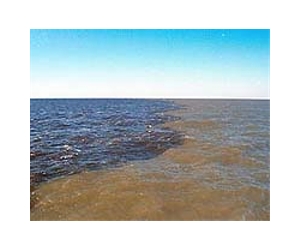
Record-setting "dead zones" in the Gulf of Mexico and Chesapeake Bay appear likely this summer, according to new forecasts from a University of Michigan researcher. Donald Scavia, a professor at the U-M School of Natural Resources and Environment (SNRE), makes the annual forecasts using models driven by nutrient load estimates from the U.S. Geological Survey. In this year's Chesapeake Bay Hypoxic Volume Forecast, Scavia predicts a summer hypoxic volume of 9.9 cubic kilometers (2.4 cubic miles), the sixth-highest on record. If the upper value of the forecast range of 12.3 cubic kilometers (3 cubic miles) is reached, it will be the highest on record. The Bay is about 200 miles long on the East Coast and stretches from Maryland to Virginia. It supports thousands of species of plants, fish and animals. The Bay's oxygen levels are critical in determining the health of its ecosystem. Given recent massive flooding of cities and farms in the Mississippi River basin, the Gulf of Mexico Hypoxia Area Forecast is for the dead zone to cover between 21,500 and 22,500 square kilometers (8,400-8,800 square miles) of bottom waters along the Louisiana-Texas coast. If the prediction bears out, it will be the largest on record. "The growth of these dead zones is an ecological time bomb," said Scavia, who is also director of the Michigan Sea Grant program based at SNRE. "Without determined local, regional, and national efforts to control them, we are putting major fisheries at risk." According to Scavia, the best way to shrink the dead zones is to reduce the amount of nitrogen and phosphorous flowing into these water basins. Hypoxia refers to the loss of oxygen in water, which then leads to conditions unsustainable for aquatic life. The Chesapeake Bay and Gulf of Mexico dead zones form each spring as nitrogen and phosphorus loads from farm fertilizers, atmospheric deposition and wastewater treatment plants stimulate algae blooms. These blooms eventually die and sink to the bottom, where bacteria decompose them and consume most of the oxygen. The zones dissipate each fall as changes in water currents and temperatures mix and reaerate the water---only to return the next spring. Scavia originally developed the model to estimate the nitrogen-load reductions needed to reach particular hypoxia goals. Several years ago, he discovered that the model could also forecast the dead zone size for an upcoming season, based on the average January-May nitrogen loads for the Chesapeake Bay, and average May-June loads for the Mississippi River basin. Through two $2.5 million grants from the National Oceanic and Atmospheric Administration's Center for Sponsored Coastal Ocean Research, Scavia and fellow researchers continue to refine Gulf and Chesapeake Bay models, as well as develop hypoxia forecast models for Lake Erie, home of another iconic dead zone. In these five-year studies, they are studying why dead zones occur in coastal waters and why it has returned to Lake Erie, how to detect the cause and ways to stop the spread before the fishery and tourism industries suffer. In the 1960s and 1970s, the Lake Erie dead zone was a key driver for enacting the Clean Water Act and stimulating the environmental movement, Scavia said. In recent years, Erie dead zones have reappeared and expanded.
Related Links University of Michigan Scavia's Hypoxia forecasts Water News - Science, Technology and Politics
|
|
|
| The content herein, unless otherwise known to be public domain, are Copyright 1995-2014 - Space Media Network. AFP, UPI and IANS news wire stories are copyright Agence France-Presse, United Press International and Indo-Asia News Service. ESA Portal Reports are copyright European Space Agency. All NASA sourced material is public domain. Additional copyrights may apply in whole or part to other bona fide parties. Advertising does not imply endorsement,agreement or approval of any opinions, statements or information provided by Space Media Network on any Web page published or hosted by Space Media Network. Privacy Statement |
 del.icio.us
 Digg
Digg Reddit
 Google