|
|
|
|
|
|
|
|
|
|
|


| . |  |
. |
|
|
|
 by Staff Writers Paris (AFP) Nov 27, 2010
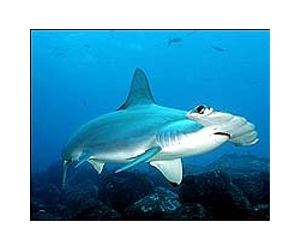
Half-a-dozen species of endangered sharks hunted on the high seas to satisfy a burgeoning Asian market for sharkfin soup are now protected in the Atlantic, a fisheries group decided Saturday. Scalloped, smooth and great hammerheads, along with oceanic white tip, cannot be targeted or kept if caught accidentally, the International Commission for the Conservation of Atlantic Tunas (ICCAT) said. Three other types of hammerhead are included in the ban: smalleye, scoophead, and whitefin. However, a proposal submitted by the European Union to extend the same level of protection to the porbeagle shark, critically endangered in the northeast Atlantic and Mediterranean, was shot down. "Canada was adamant that they were not going to let its porbeagle fishery go," said Elizabeth Wilson, a marine scientist at Washington-based advocacy group Oceana. The decisions on sharks follow 10 days of closed-door haggling at the 48-member ICCAT, which is poised to announce quotas and other measures on bluefin tuna. ICCAT is charged with ensuring that commercial fisheries are sustainable, and has the authority to set quotas and restrictions. At least 1.3 million sharks were harvested from the Atlantic in 2008 by industrial-scale fisheries unhampered by catch or size limits, according to a recent report. The actual figure is likely several fold higher due to under-reporting. To date, the only other shark species subject to a fishing ban in the Atlantic is the big-eye thresher, a measure passed last year. "These decisions increase the chances that these species will continue to swim in the Atlantic," said Matt Rand, a shark expert with the Pew Environment Group. "But there's a lot more work to be done. Fifty percent of open water sharks in the world are threatened with extinction," he said, citing the classification of the International Union for the Conservation of Nature (IUCN). A push by the United States to require that all sharks be brought back to shore whole failed to muster the needed consensus. The measure would have boosted enforcement of a widely flouted international ban on finning, whereby dead or dying shark are dumped back into the sea after the choice morsel has been removed. Another US proposal to establish quotas for the shortfin mako shark also fell short. "Half the countries at the meeting were opposed," said Wilson. While willing to ban catches of certain species that are already in sharp decline, these nations do not want to set a precedent of establishing quotas for sharks with relatively healthy populations, she explained. There are no multinational limits on shark fishing anywhere in the world. ICCAT did, however, call for data collection on the shortfin mako to help scientists measure population levels. It also voted a measure requiring commercial fishermen to remove hooks and netting from accidentally caught sea turtles, and to keep records. North Atlantic populations of the oceanic white tip have declined by 70 percent, and hammerheads by more than 99 percent, according to IUCN. Sharks have reigned at the top of the ocean food chain for hundreds of millions of years. But the consummate predators are especially vulnerable to industrial-scale overfishing because they mature slowly and produce few offspring. Tens of millions of the open-water predators are extracted from global seas every year. Regional studies have shown that when shark populations crash the impact cascades down through the food chain, often in unpredictable and deleterious ways.
Related Links Water News - Science, Technology and Politics
|
|
|
| The content herein, unless otherwise known to be public domain, are Copyright 1995-2014 - Space Media Network. AFP, UPI and IANS news wire stories are copyright Agence France-Presse, United Press International and Indo-Asia News Service. ESA Portal Reports are copyright European Space Agency. All NASA sourced material is public domain. Additional copyrights may apply in whole or part to other bona fide parties. Advertising does not imply endorsement,agreement or approval of any opinions, statements or information provided by Space Media Network on any Web page published or hosted by Space Media Network. Privacy Statement |
 del.icio.us
 Digg
Digg Reddit
 Google