








|
|
|
|
|
|
|
|
|
|
|


| . |  |
. |
|
|
|
 by Staff Writers Washington DC (SPX) Dec 31, 2010
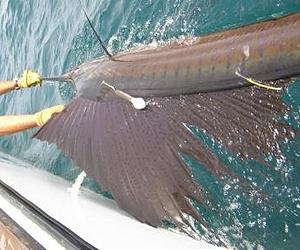
Billfish and tuna, important commercial and recreational fish species, may be more vulnerable to fishing pressure because of shrinking habitat, according to a new study published by scientists from NOAA, The Billfish Foundation, and University of Miami Rosenstiel School of Marine and Atmospheric Science. An expanding zone of low oxygen, known as a hypoxic zone, in the Atlantic Ocean is encroaching upon these species' preferred oxygen-abundant habitat, forcing them into shallower waters where they are more likely to be caught. During the study, published recently in the journal Fisheries Oceanography, scientists tagged 79 sailfish and blue marlin with satellite tracking devices in the western North Atlantic, off south Florida and the Caribbean; and eastern tropical Atlantic, off the coast of West Africa. The pop off archival satellite tags monitored horizontal and vertical movement patterns. Researchers confirmed that billfish prefer oxygen rich waters closer to the surface and will actively avoid waters low in oxygen. While these hypoxic zones occur naturally in many areas of the world's tropical and equatorial oceans, scientists are concerned because these zones are expanding and occurring closer to the sea surface, and are expected to continue to grow as sea temperatures rise. "The hypoxic zone off West Africa, which covers virtually all the equatorial waters in the Atlantic Ocean, is roughly the size of the continental United States, and it's growing," said Dr. Eric D. Prince, NOAA's Fisheries Service research fishery biologist. "With the current cycle of climate change and accelerated global warming, we expect the size of this zone to increase, further reducing the available habitat for these fish." Less available habitat can lead to more fish being caught since the fish are concentrated near the surface. Higher catch rates from these areas may give the false appearance of more abundant fish stocks. The shrinking availability of habitat and resulting increases to catch rates are important factors for scientists to consider when doing population assessments. Researchers forecast that climate change and its associated rise in ocean temperatures will further increase the expansion of hypoxic zones in the world's oceans. As water temperature increases, the amount of oxygen dissolved in water decreases, further squeezing billfish into dwindling available habitat and exposing them to even higher levels of exploitation.
Related Links NOAA Fisheries Service Southeast Region Water News - Science, Technology and Politics
|
|
|
| The content herein, unless otherwise known to be public domain, are Copyright 1995-2014 - Space Media Network. AFP, UPI and IANS news wire stories are copyright Agence France-Presse, United Press International and Indo-Asia News Service. ESA Portal Reports are copyright European Space Agency. All NASA sourced material is public domain. Additional copyrights may apply in whole or part to other bona fide parties. Advertising does not imply endorsement,agreement or approval of any opinions, statements or information provided by Space Media Network on any Web page published or hosted by Space Media Network. Privacy Statement |
 del.icio.us
 Digg
Digg Reddit
 Google







