|
|
|
|
|
|
|
|
|
|
|


| . |  |
. |
|
|
|
 by Staff Writers Stanford CA (SPX) Apr 13, 2010
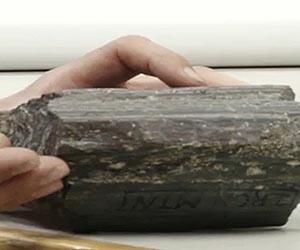
Four billion years ago, our then stripling Sun radiated only 70 to 75 percent as much energy as it does today. Other things on Earth being equal, with so little energy reaching the planet's surface, all water on the planet should been have frozen. But ancient rocks hold ample evidence that the early Earth was awash in liquid water - a planetary ocean of it. So something must have compensated for the reduced solar output and kept Earth's water wet. To explain this apparent paradox, a popular theory holds there must have been higher concentrations of greenhouse gases in the atmosphere, most likely carbon dioxide, which would have helped retain a greater proportion of the solar energy that arrived. But a team of earth scientists analyzed the mineral content of 3.8-billion-year-old marine rocks from Greenland and concluded otherwise. "There is no geologic evidence in these rocks for really high concentrations of a greenhouse gas like carbon dioxide," said Dennis Bird, professor of geological and environmental sciences at Stanford University. Instead, the team proposes that the vast global ocean of early Earth absorbed a greater percentage of the incoming solar energy than today's oceans, enough to ward off a frozen planet. Because the first landmasses that formed on Earth were small - mere islands in the planetary sea - a far greater proportion of the surface of was covered with water than today. The study is detailed in a paper published in the April 1 issue of Nature. Bird and Norman Sleep, a professor of geophysics, are among the four authors. The lead author is Minik Rosing, a geology professor at the Natural History Museum of Denmark, University of Copenhagen, and a former Allan Cox Visiting Professor at Stanford's School of Earth Sciences. The crux of the theory is that because oceans are darker than continents, particularly before plants and soils covered landmasses, seas absorb more sunlight. "It's the same phenomenon you will experience if you drive to Wal-Mart on a hot day and step out of your car onto the asphalt," Bird said. "It's really hot walking across the blacktop until you get onto the white concrete sidewalk." Another key component of the theory is in the clouds. "Not all clouds are the same," Bird said. Clouds reflect sunlight back into space to a degree, cooling Earth, but how effective they are depends on the number of tiny particles available to serve as nuclei around which the water droplets can condense. An abundance of nuclei means more droplets of a smaller size, which makes for a denser cloud and a greater reflectivity, or albedo, on the part of the cloud. Most nuclei today are generated by plants or algae and promote the formation of numerous small droplets. But plants and algae didn't flourish until much later in Earth's history, so their contribution of potential nuclei to the early atmosphere circa 4 billion years ago would have been minimal. The few nuclei that might have been available would likely have come from erosion of rock on the small, rare landmasses of the day and would have caused larger droplets that were essentially transparent to the solar energy that came in to Earth, according to Bird. "We put together some models that demonstrate, with the slow continental growth and with a limited amount of clouds, you could keep water above freezing throughout geologic history," Bird said. "What this shows is that there is no faint early Sun paradox," said Sleep. The modeling work was done with climate modeler Christian Bjerrum, a professor in the Department of Geography and Geology, University of Copenhagen, also a co-author of the Nature paper. The rocks that the team analyzed are a type of marine sedimentary rock called a banded iron formation. It is characterized by thin alternating bands of quartz, magnetite, an iron-rich mineral, and siderite, a mineral with a high carbon content, but also some iron. "Any rock carries a memory of the environment in which it formed," Rosing said. "These ancient rocks that are about 3.8 billion years old, they actually carry a memory of the composition of the ocean and atmosphere at the time when they were deposited." The critical part of the rocks' memory was the banding and that iron was found chemically bound to oxygen rather than CO2 in the bands. The alternating bands would only have been deposited if the carbon dioxide content of the atmosphere kept shifting back and forth across a threshold that controlled which mineral was deposited. But that also meant that the amount of carbon dioxide couldn't stray too far from that threshold. If there had been either substantially more or less carbon dioxide, only one of the minerals would have been laid down. Another constraint on early carbon dioxide levels came from life itself. In the days before photosynthetic organisms spread across the globe, most life forms were methanogens, single-celled organisms that consumed hydrogen and carbon dioxide and produced methane as a digestive byproduct. But to thrive, methanogens need a balanced diet. If the concentration of either of their foodstuffs veers too far below their preferred proportions, methanogens won't survive. Their dietary restrictions, specifically the minimum concentration of hydrogen, provided another constraint on the concentration of carbon dioxide in the atmosphere, and it falls well below the level needed for a greenhouse effect sufficient to compensate for a weak early Sun. "The conclusion from all this is that we can't solve a faint Sun paradox and also satisfy the geologic and metabolic constraints by having high carbon dioxide values," Bird said. But the theory of a lower Earthly albedo meets those constraints. "The lower albedo counterbalanced the fainter sun and provided Earth with clement conditions without the need for dramatically higher concentrations of greenhouse gasses in the atmosphere," Rosing said.
Related Links Stanford Explore The Early Earth at TerraDaily.com
|
|
|
| The content herein, unless otherwise known to be public domain, are Copyright 1995-2014 - Space Media Network. AFP, UPI and IANS news wire stories are copyright Agence France-Presse, United Press International and Indo-Asia News Service. ESA Portal Reports are copyright European Space Agency. All NASA sourced material is public domain. Additional copyrights may apply in whole or part to other bona fide parties. Advertising does not imply endorsement,agreement or approval of any opinions, statements or information provided by Space Media Network on any Web page published or hosted by Space Media Network. Privacy Statement |
 del.icio.us
 Digg
Digg Reddit
 Google