


|
|
|
|
|
|
|
|
|
|
|


| . |  |
. |
|
|
|
 by Martin Sieff Washington (UPI) Jun 1, 2009
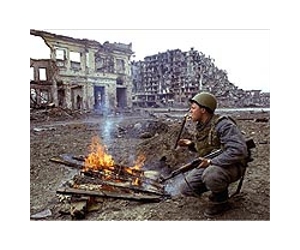
Recent wars involving major powers over the past decade have usually pitted them against small or technologically limited opponents. Some of the lessons learned from these wars are extremely important, but others are misleading. The most misleading lesson to be learned from quick "clean" wars against over-matched opponents is that war is predictable and can be contained. U.S.-led armed forces wrapped up the Iraqi army in just a few days in 1991 and in less than three weeks in 2003. Both battlefield performances were highly impressive but in some respects misleading. As Patrick Cockburn noted in his excellent biography of Moqtada Sadr, the Iraqi army had been exhausted by its long eight year war against numerically far vaster Iran from 1980 to 1988. When Saddam Hussein stumbled into an unanticipated war against the United States only three years later, the Iraqi people and their armed forces had not recovered and morale was rock bottom. Sometimes, powerful militaries perform extremely badly in small wars but then learn valuable lessons from the experience. The Russian army's performance was dismal in the First Chechen War of 1994-96, tactically unsophisticated and poor but ruthless and overwhelming in the Second Chechen War from 1999 until well into the 21st century, but surprisingly effective, even against a small enemy, in the former Soviet republic of Georgia in 2008. The Israeli army was widely perceived to have performed poorly in its ground operations against Hezbollah in southern Lebanon in July 2006 but proved tactically overwhelming against Hamas in Gaza in January this year. Usually, small conventional wars result in low casualties and negligible weapons attrition for the victor -- especially if it is a superpower. That was certainly the case in Russia's five days of military operations in the former Soviet republic of Georgia in the Caucasus from Aug. 8 to 12, 2008. According to Ilya Kramnik, the widely respected RIA Novosti military correspondent, the Russian army suffered only 71 killed, 19 missing and four aircraft destroyed, as well as no more than 10 to 15 Main Battle Tanks damaged or destroyed. While Georgian anti-air defenses supplied by the United States therefore proved effective to at least some degree, the level of resistance put up by the Georgian army was confirmed as negligible. However, small wars often morph into long-term counterinsurgency operations against guerrillas. Napoleon Bonaparte conquered every major continental army in Europe 200 years ago, and even in an age before the invention of automobiles or railroads, his forces had no trouble conquering Spain. But holding it was a different matter. Our modern term "guerrilla" comes from the highly effective Spanish insurgency attacks that Napoleon's conventional forces were never able to conquer, despite their most energetic and brutal attempts to do so. More than 130 years later the Wehrmacht, the army of Nazi Germany, learned the same lesson in Yugoslavia. With its vastly advanced military technology, it was unable to crush the communist partisan forces supplied by Britain and led by Josip Broz Tito during World War II. Such long-term counterinsurgency conflicts, like the two Russian wars in Chechnya over the past 15 years or the struggle the U.S. armed forces have been waging in Iraq against Sunni Muslim insurgents since May 2003, use up a lot more equipment than policymakers usually expect, even if the actual casualties suffered in the campaign remain relatively low. They teach the lesson that while wars can be all too easy to get into, they are often a lot more difficult to get out of. Part 4: The lessons of physics applied to conventional operations in war
Related Links The latest in Military Technology for the 21st century at SpaceWar.com
|
|
|
| The content herein, unless otherwise known to be public domain, are Copyright 1995-2014 - Space Media Network. AFP, UPI and IANS news wire stories are copyright Agence France-Presse, United Press International and Indo-Asia News Service. ESA Portal Reports are copyright European Space Agency. All NASA sourced material is public domain. Additional copyrights may apply in whole or part to other bona fide parties. Advertising does not imply endorsement,agreement or approval of any opinions, statements or information provided by Space Media Network on any Web page published or hosted by Space Media Network. Privacy Statement |
 del.icio.us
 Digg
Digg Reddit
 Google