|
|
|
|
|
|
|
|
|
|
|


| . |  |
. |
|
|
|
 by Staff Writers Durham, UK (SPX) Sep 05, 2008
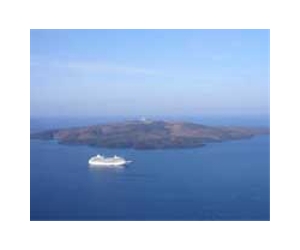
Scientists have exploited crystals from lavas to unravel the records of volcanic eruptions. The team, from Durham University and the University of Leeds, studied crystal formation from a volcano, in Santorini, in Greece, to calculate the timescale between the trigger of volcanic activity and the volcano's eruption. They say the technique can be applied to other volcanoes - such as Vesuvius, near Naples, in Italy - and will help inform the decisions of civil defence agencies. Worldwide, it is estimated that between 50 and 70 volcanoes erupt each year, but due to the long gaps between eruptions at most volcanoes it is hard to understand how any individual volcano behaves. This work allows scientists to better understand this behaviour. The research, funded by the Natural Environment Research Council (NERC), is published this week in the prestigious scientific journal Science. The scientists looked at crystals from the 1925-28 eruption of Nea Kameni, in Santorini. Lead author Dr Victoria Martin, of Durham University, showed that the crystal rims reacted with molten rock, or magma, as it moved into the volcano's shallow chamber prior to eruption. This process is thought to be associated with shallow level earthquake activity, as shown by modern volcano monitoring. By studying the area between the crystal core and the rim the team then worked out how long the rims had existed - revealing how long the magma was in the shallow chamber before it erupted. The crystals showed the 1925-28 eruption at Nea Kameni took place three to ten weeks after the magma entered the shallow system. As magma movement typically causes seismic activity, if any future seismic or inflation activity at Nea Kameni can be linked to magma recharge of the volcano, the scientists predict an eruption could follow within a similar timescale. They hope this method can be applied to other volcanoes, allowing the pre-eruption behaviour to be better understood - and understanding of volcanoes to be extended back further in time. Co-author Dr Dan Morgan, from the School of Earth and Environment, at the University of Leeds, said: "We hope to develop these techniques further and apply them to more volcanoes worldwide. "Potentially, these techniques could extend our knowledge of volcanic recharge considerably, as they can be applied to material erupted before volcanic monitoring was commonplace." Professor Jon Davidson, Chair of Earth Sciences at Durham University, said: "We hope that what we find in the crystals in terms of timescales can be linked with phenomena such as earthquakes "If we can relate the timescales we measure to such events we may be able to say when we could expect a volcano to erupt. "This is an exciting new method that will help us understand the timescales of fundamental volcanic processes driving eruptions."
Related Links Durham University Bringing Order To A World Of Disasters When the Earth Quakes A world of storm and tempest
|
|
|
| The content herein, unless otherwise known to be public domain, are Copyright 1995-2014 - Space Media Network. AFP, UPI and IANS news wire stories are copyright Agence France-Presse, United Press International and Indo-Asia News Service. ESA Portal Reports are copyright European Space Agency. All NASA sourced material is public domain. Additional copyrights may apply in whole or part to other bona fide parties. Advertising does not imply endorsement,agreement or approval of any opinions, statements or information provided by Space Media Network on any Web page published or hosted by Space Media Network. Privacy Statement |
 del.icio.us
 Digg
Digg Reddit
 Google