


|
|
|
|
|
|
|
|
|
|
|


| . |  |
. |
|
|
|
 by Staff Writers Syracuse NY (SPX) Aug 12, 2008
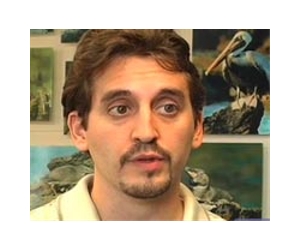
A study by researchers at the SUNY College of Environmental Science and Forestry (ESF) has documented, for the first time in the northeastern United States, that a variety of bird species are extending their breeding ranges to the north, a pattern that adds to concerns about climate change. Focusing on 83 species of birds that have traditionally bred in New York state, the researchers compared data collected in the early 1980s with information gathered between 2000 and 2005. They discovered that many species had extended their range boundaries, some by as much as 40 miles. "They are indeed moving northward in their range boundaries," said researcher Benjamin Zuckerberg, whose Ph.D. dissertation included the study. "But the real signal came out with some of the northerly species that are more common in Canada and the northern part of the U.S. Their southern range boundaries are actually moving northward as well, at a much faster clip." Among the species moving north are the Nashville warbler, a little bird with a yellow belly and a loudly musical two-part song, and the pine siskin, a common finch that resembles a sparrow. Both birds have traditionally been seen in Northern New York but are showing significant retractions in their southern range boundaries, Zuckerberg said. Birds moving north from more southern areas include the red-bellied woodpecker, considered the most common woodpecker in the Southeastern United States, and the Carolina wren, whose "teakettle, teakettle, teakettle" song is surprisingly loud for a bird that weighs less than an ounce. "There are a wide spectrum of changes that are occurring and those changes are occurring in a relatively short amount of time. We're not talking centuries, we're talking decades," said William Porter, an ESF faculty member and director of ESF's Adirondack Ecological Center, who worked with Zuckerberg on the study. "New York citizens need to recognize that these changes are occurring," Porter said. "Whether they are good or bad, whether they should be addressed, whether we should adapt to them, whether we should try to mitigate some of this, those are questions that really, rightfully, belong in the political arena." The study compared data collected during the state Department of Environmental Conservation's Breeding Bird Atlas census, which engaged thousands of citizen volunteers to observe and report the birds they could identify. The first atlas was created between 1980 and 1985; the second was done between 2000 and 2005. New York was the first state to complete two breeding bird atlases, Zuckerberg said, making it the only state that is able, at this point, to produce this kind of research. Zuckerberg said similar changes were found in birds that breed in forests and those that inhabit grasslands, in both insectivores and omnivores, and even in new tropical migrants that are typically seen in Mexico and South America. "What you begin to see is a systematic pattern of these species moving northward as we would predict with regional warming," he said.
Related Links SUNY College of Environmental Science and Forestry Climate Science News - Modeling, Mitigation Adaptation
|
|
|
| The content herein, unless otherwise known to be public domain, are Copyright 1995-2014 - Space Media Network. AFP, UPI and IANS news wire stories are copyright Agence France-Presse, United Press International and Indo-Asia News Service. ESA Portal Reports are copyright European Space Agency. All NASA sourced material is public domain. Additional copyrights may apply in whole or part to other bona fide parties. Advertising does not imply endorsement,agreement or approval of any opinions, statements or information provided by Space Media Network on any Web page published or hosted by Space Media Network. Privacy Statement |
 del.icio.us
 Digg
Digg Reddit
 Google