


|
|
|
|
|
|
|
|
|
|
|


| . |  |
. |
|
|
|
 by Staff Writers Bakersfield, Calif. (UPI) Jun 6, 2009
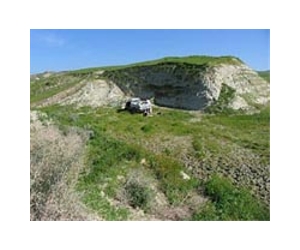
A former coastal bay near Bakersfield, Calif., is filled with the fossilized remains of marine animals whose species have long gone extinct, scientists say. Scientists from the University of California-Berkeley said the Sharktooth Hill site could be seen as the richest fossil site in the entire world -- a layer of fossils offers clues to animal species dating back to 15 million years ago, The San Francisco Chronicle said Saturday. Scientists said the area was once home to ancient animal species that during a period of up to 700,000 years would die by the millions. Evolutionary biologist Jere Lipps, UC Museum of Paleontology curator and co-author of a report on the Sharktooth Hill site, said the wealth of fossils at the now-inland California location makes it invaluable to the science world. "It's as important to science and the public as the Dinosaur National Monument in Utah and Colorado, and the La Brea Tar Pits in Los Angeles," he told the Chronicle.
Related Links Explore The Early Earth at TerraDaily.com
|
|
|
| The content herein, unless otherwise known to be public domain, are Copyright 1995-2014 - Space Media Network. AFP, UPI and IANS news wire stories are copyright Agence France-Presse, United Press International and Indo-Asia News Service. ESA Portal Reports are copyright European Space Agency. All NASA sourced material is public domain. Additional copyrights may apply in whole or part to other bona fide parties. Advertising does not imply endorsement,agreement or approval of any opinions, statements or information provided by Space Media Network on any Web page published or hosted by Space Media Network. Privacy Statement |
 del.icio.us
 Digg
Digg Reddit
 Google