


|
|
|
|
|
|
|
|
|
|
|


| . |  |
. |
|
|
|
 by Staff Writers Columbus OH (SPX) Jun 23, 2009
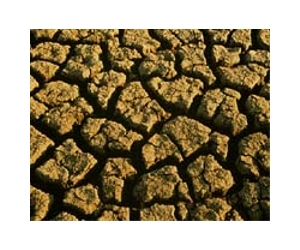
Two abrupt and drastic climate events, 700 years apart and more than 45 centuries ago, are teasing scientists who are now trying to use ancient records to predict future world climate. The events - one, a massive, long-lived drought believed to have dried large portions of Africa and Asia, and the other, a rapid cooling that accelerated the growth of tropical glaciers - left signals in ice cores and other geologic records from around the world. Lonnie Thompson, University Distinguished Professor of Earth Sciences at Ohio State University, and researcher with the Byrd Polar Research Center there, outlined the puzzle to colleagues at the Chapman Conference on Abrupt Climate Change. The meeting was sponsored by the American Geophysical Union and the National Science Foundation. Thompson, who has led more than 50 expeditions to drill cores through ice caps on some the highest and most remote regions of the planet, believes that the records from the tropical zones on Earth are the most revealing and that the last 1,000 years provides the best clues. "I would argue that the last 1,000 years are most critical from the perspective of looking at the future," he said The first of the two tantalizing events is apparent in an ice core drilled in 1993 from an ice field in the Peruvian Andes called Huascaran. Within that core, they found a thick band of dust particles, most smaller than a micron in diameter, the concentration of which was perhaps 150 times greater than anywhere else in the core. That band dated back to 4,500 years ago. "Dust that small can be transported great distance - the question is where did it come from?" Thompson said. "I believe that record accurately reflects drought conditions in Africa and the Middle East and that the dust was carried out across the Atlantic Ocean by the northeast trade winds, across the Amazon Basin and deposited on the Huascaran ice cap. Thompson said that other records, including an ice core taken from glaciers atop Tanzania's Mount Kilimanjaro, also show a dust event dating to a time when there was substantive drying up of lakes in Africa. He said that it is the only such huge event that the ice core records show for the past 17,000 years. The other mystery surrounds a major cooling event that Thompson believes happened about 700 years earlier. During a 2002 expedition to the Quelccaya ice cap in Peru, the largest tropical ice field in the world, Thompson and colleagues discovered patches of ancient wetland plants that had been exposed as the edge of the ice cap retreated. When carbon-dated, the plants were shown to be 5,200 years old, meaning that they had been covered, and preserved, by the ice for the last 52 centuries. Since then, recent expeditions have located similar patches of plants revealed by the ice's retreat. All date back to at least 5,200 years ago and some as much as 7,000 years ago. "This means that sometime around 5,200 years ago, there was a rapid cooling event in this region and the ice expanded shielding the plants from damage and decay," Thompson said. Other records from around the world seem to support the idea of a cooling event at this time. Divers in Lake Tahoe, Nevada, found nearly two dozen ancient tree trunks preserved at the lake's bottom. Wood samples from the trunks date back 5,200 years and geologic records show the current lake levels have remained steady since that point in time. Thompson also pointed to the timing of past climate changes in South America and the rise and fall of early cultures in the region. Evidence from the ice cores from Quelccaya suggest that cultures might have grown during wet periods in the Peruvian Highlands and waned when the climate became drier. Conversely, cultures appeared to grow in the country's coastal regions when the climate became wetter and were lost as drying increased. "This suggests that there could have been persistent climate periods that allowed these cultures to flourish under certain conditions and fail under others," he said. Thompson leads a new expedition next week to two new sites in the Andes in hopes of drilling cores that will show more detailed records of both events. The evidence that researchers have, both from ice cores and from the rapid retreat of glaciers, show that high-altitude ice fields reflect similar changes that are currently visible all across the temperate portions of the globe. "The ice caps are sentinels of the earth's overall climate," he said. "And the data shows that at all of these sites, the rate at which the ice is vanishing is accelerating. "To me, these are indicators that these areas are already being adversely impacted by changes in our current climate."
Related Links Earth Sciences at Ohio State University Climate Science News - Modeling, Mitigation Adaptation
|
|
|
| The content herein, unless otherwise known to be public domain, are Copyright 1995-2014 - Space Media Network. AFP, UPI and IANS news wire stories are copyright Agence France-Presse, United Press International and Indo-Asia News Service. ESA Portal Reports are copyright European Space Agency. All NASA sourced material is public domain. Additional copyrights may apply in whole or part to other bona fide parties. Advertising does not imply endorsement,agreement or approval of any opinions, statements or information provided by Space Media Network on any Web page published or hosted by Space Media Network. Privacy Statement |
 del.icio.us
 Digg
Digg Reddit
 Google