



|
|
|
|
|
|
|
|
|
|
|


| . |  |
. |
|
|
|
 by John C.K. Daly Washington (UPI) Sep 5, 2008
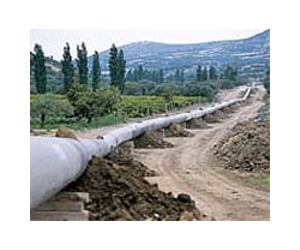
The consequences of last month's armed confrontation between Georgia and Russia over the disputed enclaves of South Ossetia and Abkhazia continue to ripple, extending their influence to Uzbekistan, far to the east. Stripped of the rhetoric, the lesson that all the former Soviet republics drew from the encounter was that EU, NATO and American promises fall short of deterring Russian foreign policy toward what it terms the "near abroad." The subtext of the clash is that Washington's and the EU's assumptions about Russia blithely standing by as alternative export routes are built for Caspian and Central Asian energy assets now appear naive at best, and, for the local states, increasingly hollow. Western plans to build a natural gas pipeline to parallel the 1,092-mile, $3.6 billion Baku-Tbilisi-Ceyhan pipeline, which could be joined by an additional Trans-Caspian underwater pipeline to transfer Turkmen and Uzbek natural gas to Western markets, now appear more and more problematic. Taking advantage of the situation, Russia's energy giant Gazprom recently has been reaching out to Azerbaijan, Kazakhstan, Turkmenistan and Uzbekistan and, in a major policy reversal, offering to pay near-market European rates for future natural gas production. Azerbaijan is considering Moscow's offer and, if it is accepted, the proposed Nabucco pipeline is likely to be abandoned, as insufficient gas reserves are likely to be found to fill it. The Central Asian nation of Uzbekistan has concluded that, for the moment at least, its exports options lie more with Moscow than any Western proposals. While Uzbekistan under President Islam Karimov has doggedly pursued a foreign policy independent of Moscow since the country achieved independence in 1991, in this instance at least, geography trumps Western relations. On Sept. 1 Russian Prime Minister Vladimir Putin flew into Tashkent and held two hours of discussions with Karimov. The upshot of the meeting was that Russia agreed to pay Uzbekistan $300 per thousand cubic meters of natural gas, which, while still below the nearly $400-plus tcm that Gazprom currently charges European customers, nevertheless represents a nearly 100-percent increase in what Gazprom pays at present. The two leaders also agreed to renovate two Soviet-era natural gas pipelines, Central Asia Center-1 and Central Asia Center-2, which will allow Uzbekistan to export its natural gas to Russia through Turkmenistan. By any measure the agreements represent as great a triumph for Russia in the energy "Great Game" as they do a setback for the West, particularly Washington. The agreement represents yet another setback for Washington's efforts to wean Central Asia away from Moscow's orbit. Of all the "Stans," Karimov's government was the most disposed to cooperate with Washington, as epitomized in the agreement signed in the month after Sept. 11, 2001, that saw Tashkent grant Washington the use of its Karshi-Khanabad airbase for Operation Enduring Freedom in neighboring Afghanistan. Washington previously had sought to introduce globalistic free market "shock therapy" economic reforms in the post-Soviet space, which Karimov declined, preferring his government to manage the nation's transition from a centrally planned economy to capitalist principles internally rather than relying on hordes of suitcase-toting Western advisers. Accordingly, Uzbekistan was spared the hyperinflation that ravaged the Russian middle class in 1992 as well as the chaos that enveloped the Russian Federation six years later when Moscow allowed the ruble to float freely, again unleashing massive inflation. As Tashkent declined Washington's economic guidance, cooperation focused largely on military matters. The tragic events of May 2005 in Andijan, where government troops suppressed demonstrators who previously attacked police and military installations as well as a prison, freeing hundreds of inmates, resulted in an official death toll of 178, which Western human rights activists claimed was far higher. In the wake of Washington's muffled and ambivalent response, Tashkent abrogated its status of forces agreement with Washington, leading the Pentagon to leave Karshi-Khanabad six months later. Relations have recently improved, particularly since Washington and Tashkent share a common interest in seeing Afghanistan pacified, but relations have yet to be restored to their previous level. The tragedy of the misunderstanding is that Uzbekistan's fuel and electrical resources could have been supplied southward to aid in Afghanistan's reconstruction, but, nearly seven years after the U.S.-led invasion, peace seems as elusive as ever. Not that all is sweetness and light between Moscow and Tashkent. The administration of President Dmitry Medvedev has been aggressively seeking support from former Soviet Central Asian republics for his government's unilateral acknowledgment of Abkhazian and South Ossetian independence, something that the regional leaders have steadfastly refused to do up to now, most notably at the Shanghai Cooperation Organization summit in Dushanbe last weekend. Lest his illustrious visitor be in any doubt about Uzbek intentions, Karimov politely told Putin, "We will examine the circle of pressing timely issues that we see and observe, on which we have our own views and which we are ready not only to discuss together, but honestly to express our own position on those issues." An Izvestia correspondent, seeking to salvage something positive from the experience, noted that at a dinner that Karimov held for his guest, Karimov's dinner-table toasts were "anti-Georgian." This week Putin will have another chance to solicit his Central Asian colleagues for support at the upcoming Collective Security Treaty Organization summit in Moscow, as on Aug. 29 Russia announced it would seek CSTO recognition of the independence of Abkhazia and South Ossetia. CSTO, which has observer status at the U.N. General Assembly, consists of Armenia, Belarus, Kazakhstan, Kyrgyzstan, Russia, Tajikistan and Uzbekistan. Azerbaijan and Georgia, which perhaps not coincidentally U.S. Vice President Dick Cheney visited this week, withdrew from the organization in 1999. Putin is unlikely to make much headway with Karimov, however, as they share the common trait of fierce nationalism, and the Uzbeks, having suffered more than 130 years of Russian imperialism, continue to put their national interest first, however much it might annoy their former overlords. And so the Great Game continues. Putin can take some solace in his rebuff that Uzbekistan has not recognized Kosovo's independence, either, unlike neighboring Afghanistan, which was the first. (e-mail: [email protected])
Related Links Powering The World in the 21st Century at Energy-Daily.com
|
|
|
| The content herein, unless otherwise known to be public domain, are Copyright 1995-2014 - Space Media Network. AFP, UPI and IANS news wire stories are copyright Agence France-Presse, United Press International and Indo-Asia News Service. ESA Portal Reports are copyright European Space Agency. All NASA sourced material is public domain. Additional copyrights may apply in whole or part to other bona fide parties. Advertising does not imply endorsement,agreement or approval of any opinions, statements or information provided by Space Media Network on any Web page published or hosted by Space Media Network. Privacy Statement |
 del.icio.us
 Digg
Digg Reddit
 Google