


|
|
|
|
|
|
|
|
|
|
|


| . |  |
. |
|
|
|
 by Leander Schaerlaeckens Brussels (UPI) Jan 27, 2009
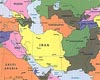
NATO's European member states will have to find more creative solutions for meeting operational needs and supporting the United States in Afghanistan, and Iran will have to be engaged if long-term stability is to be reached in the region, said NATO's chief. NATO Secretary-General Jaap de Hoop Scheffer made his first speech since the inauguration of U.S. President Barack Obama at the Security & Defense Agenda think tank in Brussels Monday. De Hoop Scheffer spoke frankly about the need for EU members to support the Obama administration in its renewed focus on the war in Afghanistan and his hopes for the future of the North Atlantic Treaty Organization ahead of a key summit in Strasbourg, France, and Kehl, Germany, in April and months before his final term comes to an end later this year. "When Washington calls, Europe should have a unified answer, backed up with the resources to match," de Hoop Scheffer said. "If Europeans expect that the United States will close Guantanamo, sign up to climate change treaties, accept EU leadership on key issues but provide nothing more in return, for example in Afghanistan, than encouragement, they should think again. It simply won't work like that." De Hoop Scheffer reiterated longstanding appeals to EU contributors to drop caveats on troop deployments in Afghanistan and allow for better coordination. "I welcome the intention by the United States to send more troops to the mission," he said of Obama's intention to add 30,000 soldiers to the 62,000-strong NATO International Security Assistance Force mission in Afghanistan. "It will help us to hold where we couldn't until now, block off infiltration, and let development take root. But I cannot accept that the U.S. has to do all of the extra heavy lifting. Europe, too, has to step up with more forces, and where that is not forthcoming, then with substantially more on the civilian side. "It is not enough to lament helicopter shortfalls in Afghanistan, yet shy away from creative solutions that could help to overcome these shortfalls," de Hoop Scheffer said. "At a time when the whole world is facing economic hardship, calling for more resources for security might seem like swimming upstream. But it remains true that security is the foundation for economic confidence. A more innovative approach on how to fund operations is necessary." De Hoop Scheffer reaffirmed his belief that progress is being made in Afghanistan. "I do not share the doom and gloom from which some seem to suffer about this effort," he said. "I don't deny the challenges. They are huge. But it has only been eight years since the Taliban was toppled. When I saw an Afghan fellow pull out his Apple iPhone in Kabul, while I was talking on my 5-year-old NATO mobile, I saw another symbol of progress." But more engagement with Afghanistan's neighboring countries is pivotal. "We need to stop looking at Afghanistan as if it were an island," de Hoop Scheffer said. "Afghanistan's problems cannot be solved by, or within, Afghanistan alone, because they are not Afghanistan's problems alone. There is a regional network of extremists, including, yes, the Taliban and al-Qaida, but also many others, which respects borders no more than they respect human rights and the rule of law. "To my mind, we need a discussion that brings in all the relevant regional players: Afghanistan, Pakistan, India, China, Russia and, yes, Iran," he said. "If you talk about a real regional approach, you cannot (exclude) Iran. If you look at the history of Afghanistan, you see that Afghanistan over the years has always been the sort of country where other nations played power games. Iran is a factor in Afghanistan. I know when I launch a suggestion about a regional approach, including Iran, that some people might have to swallow once or twice. But I think that at a certain stage we might have to find a formula that includes Iran." De Hoop Scheffer also expressed hope that the upcoming summit will be used not just for "self-congratulatory statements" or as a "get-to-know-you session with a new U.S. president" but as a platform to modernize NATO. Through a "Declaration on Alliance Security," de Hoop Scheffer hopes to confirm and expand NATO's "fundamentals" and "core purpose." These expanded goals would include fighting cyber-terrorism and close cooperation with Russia in combating piracy on common energy-transportation routes. "Piracy, long believed to have been eradicated, is back as a major international concern -- and in more than just one essential maritime route on which our trade and oil and gas supplies depend," he said. "This is not Johnny Depp with a parrot on his shoulder -- this is (rocket-propelled grenade)-wielding thugs threatening sea lanes on which our energy supplies depend." De Hoop Scheffer further said he hopes NATO once again will become, as it was during the Cold War, a platform for allies to conduct political consultations to ensure that everyone is "on the same page," even on issues not concerning NATO proper.
Related Links Learn about nuclear weapons doctrine and defense at SpaceWar.com Learn about missile defense at SpaceWar.com All about missiles at SpaceWar.com Learn about the Superpowers of the 21st Century at SpaceWar.com
|
|
|
| The content herein, unless otherwise known to be public domain, are Copyright 1995-2014 - Space Media Network. AFP, UPI and IANS news wire stories are copyright Agence France-Presse, United Press International and Indo-Asia News Service. ESA Portal Reports are copyright European Space Agency. All NASA sourced material is public domain. Additional copyrights may apply in whole or part to other bona fide parties. Advertising does not imply endorsement,agreement or approval of any opinions, statements or information provided by Space Media Network on any Web page published or hosted by Space Media Network. Privacy Statement |

 del.icio.us
 Digg
Digg Reddit
 Google