|
|
|
|
|
|
|
|
|
|
|


| . |  |
. |
|
|
|
 by Stefan Nicola Berlin (UPI) Jul 7, 2008
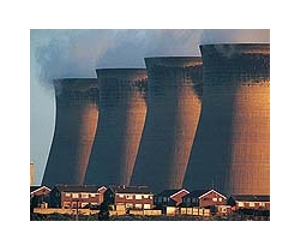
None of the leading industrialized nations has come close to meeting its promises on reducing greenhouse gas emissions, with the United States, Canada and Russia trailing especially far behind, according to a study released shortly before the Group of Eight summit in Japan. Roughly a year ago, at the G8 summit in Heiligendamm, Germany, leaders of the eight most industrialized economies -- which are responsible for more than 60 percent of carbon dioxide emissions -- pledged to fight climate change in grand style. It turns out, however, that words so far haven't been followed up with adequate action. That, at least, is the claim brought forward in a study commissioned by international financial services provider Allianz and environmental group WWF that was released this past Friday in Berlin. "None of the eight leading industrial nations have taken sufficient measures to �� limit a worldwide increase in temperatures to 2 degrees centigrade," Niklas Hoehne, author of the study, said at the report's release in Berlin. Compiled by Ecofys, a consulting agency based on environmental and energy analysis, the study examined political promises, anti-emissions policies drafted and implemented by the G8 governments, and the actual emissions trends compared with 1990 levels, the point of reference set in the Kyoto targets. Specifically, it rated each country's performance in three different categories: energy efficiency, renewable energy and the development of a functioning carbon trading market. The top scores went to Britain, followed by France and Germany, with the biggest reprimands handed to the United States, followed by Canada and Russia. The United States still lags dangerously behind, with the study claiming it "scores the worst of all G8 countries, being the highest emitter with the highest per capita emissions and an increasing trend in total emissions." The study nevertheless said there was much hope for the United States to significantly improve its rating over the next years, given its potentials on energy efficiency, bills that are currently being drafted and the upcoming government change next year. Britain was lauded for its recent legislative efforts to curb climate change, France for its international leadership role and its low emissions levels, and Germany for a successful push of renewable energy sources. Yet none of the countries did enough to live up to what was promised, the study claims, citing growing emissions (Japan, Russia), an increasing use of dirty-coal energy (Britain and Germany), and the absence of a functioning emissions scheme (Japan). Yet while the authors of the study also looked at the five growing economies of Brazil, China, India, Mexico and South Africa, they didn't rank them, adding that it was the G8 that had to lead the way. "The G8 nations have an important leadership role when it comes to the worldwide efforts to stop climate change," said Joachim Faber, a board member at Allianz. "They have to lead the way into a low-emission economy that banks on CO2-low technologies and clean energy." Of course, Allianz has its own motivations in all this: Over the past 30 years, the amount of money insurance companies had to pay because of natural catastrophes grew by a factor of 15. Leaders from the G8 met in Hokkaido, Japan, on Monday, launching a three-day summit that will focus on climate change, high energy and food prices, aid to Africa, and a host of other international issues. The report released Friday also contains a call to G8 nations to commit to a binding long-term target for emission reductions of 80 percent by 2050, and as close as possible to 40 percent by 2020. On top of that, "G8 nations should agree to grant developing countries measurable financial and technical aid, so that they can use low-CO2 technologies and prepare for climate change, which is inevitable," said Regine Guenther, head of climate change policy at the WWF in Germany. "We have 10 to 15 years left in which the global emissions have to peak and decline. Time is running out." (e-mail: [email protected])
Related Links Climate Science News - Modeling, Mitigation Adaptation
|
|
|
| The content herein, unless otherwise known to be public domain, are Copyright 1995-2014 - Space Media Network. AFP, UPI and IANS news wire stories are copyright Agence France-Presse, United Press International and Indo-Asia News Service. ESA Portal Reports are copyright European Space Agency. All NASA sourced material is public domain. Additional copyrights may apply in whole or part to other bona fide parties. Advertising does not imply endorsement,agreement or approval of any opinions, statements or information provided by Space Media Network on any Web page published or hosted by Space Media Network. Privacy Statement |
 del.icio.us
 Digg
Digg Reddit
 Google