



|
|
|
|
|
|
|
|
|
|
|


| . |  |
. |
|
|
|
 by Staff Writers Washington DC (SPX) Oct 14, 2008
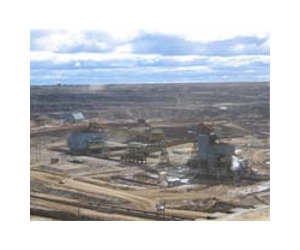
Alternative sources of fossil fuels such as oil sands and coal-to-liquids have significant economic promise, but the environmental consequences must also be considered, according to a RAND Corporation study. The study by RAND, a non-profit research organization, provides a review of coal-to-liquids and Canadian oil sands technologies, considers possible impacts on fuel costs from future limitations on carbon dioxide emissions, and compares costs of the alternative fossil fuels to conventional petroleum fuels in 2025. The study was funded by the National Commission on Energy Policy. "With concerns about high and unstable world oil prices, there is strong interest in developing alternative fuel sources," said Michael Toman, lead author of the report. "Oil sands and coal-to-liquids represent economically important options for expanding global fuel supplies that can ease upward pressures on oil prices." However, Toman said, current methods for oil sands production require large quantities of water and can harm local water quality, though technical advances are lessening these pressures. Development of oil sands also can cause large-scale disturbances of land and habitat. Both resources also represent potentially significant sources of carbon dioxide emissions; carbon dioxide is the key greenhouse gas driving global climate change. Total carbon dioxide emissions from production and use of oil sands are about 20 percent higher than conventional petroleum, while total emissions from production and use of liquid fuels from coal are about twice the emissions of conventional fuels. Emissions of carbon dioxide from producing oil sands and liquid fuels from coal can be reduced to levels comparable to conventional petroleum by investing in equipment to capture and pump the carbon dioxide into long-term underground storage. The technical and economic feasibility of large-scale carbon capture and storage is currently under study, but has not yet been demonstrated. "Because the potential environmental impacts are considerable, decision makers need to assess the economic and other benefits of alternative fossil fuels relative to these environmental concerns," Toman said. Production of Canadian oil sands is commercially established and currently is greater than 1 million barrels per day. Substantial oil-sand reserves exist, with Canadian reserves second only to Saudi Arabia in volume. The study concludes that oil sands likely will remain very competitive with conventional petroleum, even after accounting for the costs of emitting or capturing and storing carbon dioxide emissions. Modern coal-to-liquids technology is currently being developed, drawing upon a sizable experience base in key industrial processes, including several decades of production in South Africa using older technology. Large-scale commercial production of coal-to-liquids would require large quantities of coal, but U.S. and global coal resources are quite adequate for meeting potential demand, according to the RAND report. The future cost of liquid fuels from coal also appears to be reasonably competitive with conventional petroleum, provided: (1) oil prices do not fall back to pre-2006 levels for extended periods; (2) there are further improvements in coal-to-liquids technology as production volumes grow; and (3) carbon dioxide limitations do not impose too large a cost burden on liquid fuels from coal relative to conventional fuels. Costs of carbon dioxide limitations would be moderated if carbon dioxide storage proves to be technically feasible and relatively low-cost on a large scale. "The most important constraints for oil sands are the local environmental impacts and demand for water," Toman said. "Since major investments in coal-to-liquids become more likely if environmentally sound carbon capture and storage can be commercialized at relatively low cost, the future expansion of this fuel source will be strongly influenced by future private sector and government initiatives to support such commercialization." "However, even with carbon capture and storage deployed, neither alternative fuel offers a path toward large long-term reductions in total carbon dioxide emissions to limit climate change," Toman said. "There will still be a need to develop lower-carbon fuel options, such as fuel synthesized from a mixture of coal and sustainably grown biomass."
Related Links RAND Corporation Powering The World in the 21st Century at Energy-Daily.com
|
|
|
| The content herein, unless otherwise known to be public domain, are Copyright 1995-2014 - Space Media Network. AFP, UPI and IANS news wire stories are copyright Agence France-Presse, United Press International and Indo-Asia News Service. ESA Portal Reports are copyright European Space Agency. All NASA sourced material is public domain. Additional copyrights may apply in whole or part to other bona fide parties. Advertising does not imply endorsement,agreement or approval of any opinions, statements or information provided by Space Media Network on any Web page published or hosted by Space Media Network. Privacy Statement |
 del.icio.us
 Digg
Digg Reddit
 Google