



|
|
|
|
|
|
|
|
|
|
|


| . |  |
. |
|
|
|
 by Staff Writers New Orleans LO (SPX) Apr 07, 2008
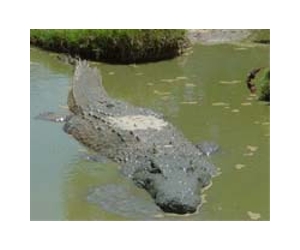
Despite their reputation for deadly attacks on humans and pets, alligators are wiggling their way toward a new role as potential lifesavers in medicine, biochemists in Louisiana reported today at the 235th national meeting of the American Chemical Society. They described how proteins in gator blood may provide a source of powerful new antibiotics to help fight infections associated with diabetic ulcers, severe burns, and "superbugs" that are resistant to conventional medication. Their study, described as the first to explore the antimicrobial activity of alligator blood in detail, found a range of other promising uses for the gator's antibiotic proteins. Among them: combating Candida albicans yeast infections, which are a serious problem in AIDS patients and transplant recipients, who have weakened immune systems, the scientists say. "We're very excited about the potential of these alligator blood proteins as both antibacterial and antifungal agents," says study co-author Mark Merchant, Ph.D., a biochemist at McNeese State University in Lake Charles, La. "There's a real possibility that you could be treated with an alligator blood product one day." Previous studies by Merchant showed that alligators have an unusually strong immune system that is very different from that of humans. Unlike people, alligators can fight microorganisms such as fungi, viruses, and bacteria without having prior exposure to them. Scientists believe that this is an evolutionary adaptation to promote quick wound healing, as alligators are often injured during fierce territorial battles. In collaboration with Kermit Murray and Lancia Darville, both of Louisiana State University in Baton Rouge, Merchant and colleagues collected blood samples from American alligators. They then isolated disease-fighting white blood cells (leucocytes) and extracted the active proteins from those cells. In laboratory tests, tiny amounts of these protein extracts killed a wide range of bacteria, including MRSA (methicillin-resistant Staphylococcus aureus), the deadly bacteria that are moving out of health care settings and into the community. These "superbugs" are increasingly resistant to multiple antibiotics and cause thousands of deaths each year. The proteins also killed six out of eight different strains of Candida albicans, the researchers say. Their previous research also suggests that blood proteins may help fight HIV, the virus that causes AIDS. The scientists are working to identify the exact chemical structures of the antimicrobial proteins and determine which proteins are most effective at killing different microbes. The gator blood extract may contain at least four promising substances, they estimate. With the chemical structures in hand, scientists can begin developing them into antibacterial or antifungal drugs, including pills and creams, for fighting infections. These drugs show particular promise as topical ointments, Merchant says. Gator-blood creams could conceivably be rubbed onto the foot ulcers of patients with diabetes to help prevent the type of uncontrolled infections that lead to amputations, he says. The creams could also be applied to the skin of burn patients to keep infections at bay until damaged skin can heal, the researcher adds. Merchant suggests that the proteins might be called "alligacin." If studies continue to show promise, the drugs could land on pharmacy shelves in another seven to ten years, he estimates. Until then, don't try to create your own home-remedies using alligator blood, as raw, unprocessed blood could make you sick or even kill you if injected, the researcher cautions. Similar antimicrobial substances might also be found in related animals such as crocodiles, Merchant notes. In the future, he plans to study blood samples from alligators and crocodile species throughout the world to test their disease-fighting potential. The state of Louisiana and the National Science Foundation provides funding for this research.
related report Unlike conventional antibiotics that are often administered by injection or pills, the so-called "healing clays" could be used as rub-on creams or ointments to keep MRSA infections from spreading, the researchers say. The clays also show promise against a wide range of other harmful bacteria, including those that cause skin infections and food poisoning, the scientists add. Their study, one of the first to explore the antimicrobial activity of natural clays in detail, was presented today at the 235th national meeting of the American Chemical Society. Clays have been used for thousands of years as a remedy for infected wounds, indigestion, and other health problems, either by applying clay to the skin or eating it. Today, clays are commonly used at health spas in the form of mud baths and facials. Armed with new investigative tools, researchers are beginning to explore their health claims scientifically. "Clays are little chemical drug-stores in a packet," said study co-leader Lynda Williams, Ph.D., a geochemist at Arizona State University in Tempe. "They contain literally hundreds of elements. Some of these compounds are beneficial but others aren't. Our goal is to find out what nature is doing and see if we can find a better way to kill harmful bacteria." In the new study, funded by the National Institutes of Health, Willams and her colleagues collected more than 20 different clay samples from around the world to investigate their antibacterial activities. In collaboration with study co-leader Shelley Haydel, Ph.D., a microbiologist with Arizona State, the researchers tested each of the clays against several different bacteria known to cause human diseases. These bacteria include MRSA (methicillin-resistant Staphylococcus aureus), Mycobacterium ulcerans (a microbe related to the tuberculosis bacterium that causes a flesh-eating disease known as Buruli ulcer), as well as E. coli and Salmonella (which cause food poisoning). The researchers identified at least three clays that killed or significantly reduced the growth of these bacteria. The researchers are working to identify the specific compounds in the clays that may be responsible for its antibacterial activity. Using electron and ion microscopy, the researchers are also exploring how these antibacterial clays interact with the cell membranes of the bacteria in order to find out how they kill. Williams and Haydel are continuing to test new clay samples from around the world to determine their germ-fighting potential. They hope that the more promising clays will be developed into a skin ointment or pill to fight a variety of bacterial infections or possibly as an agricultural wash to prevent food poisoning. Several companies have expressed interest in forming partnerships to develop the clays as antimicrobial agents, the scientists say. But ordinary mud can contain dangerous bacteria as well as toxic minerals like arsenic and mercury, the researchers point out. Until healing clays are developed that are scientifically proven, which could take several years, handwashing and other proper hygiene techniques may be your best bet for keeping MRSA and other harmful bacteria at bay, they say.
Related Links American Chemical Society Epidemics on Earth - Bird Flu, HIV/AIDS, Ebola
|
|
|
| The content herein, unless otherwise known to be public domain, are Copyright 1995-2014 - Space Media Network. AFP, UPI and IANS news wire stories are copyright Agence France-Presse, United Press International and Indo-Asia News Service. ESA Portal Reports are copyright European Space Agency. All NASA sourced material is public domain. Additional copyrights may apply in whole or part to other bona fide parties. Advertising does not imply endorsement,agreement or approval of any opinions, statements or information provided by Space Media Network on any Web page published or hosted by Space Media Network. Privacy Statement |
 del.icio.us
 Digg
Digg Reddit
 Google