


Subscribe free to our newsletters via your
. 24/7 Space News .


BLUE SKY
Air quality has continued to improve in Finnish Lapland
by Staff Writers
Pallas, Finland (SPX) Sep 28, 2011


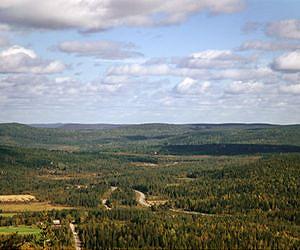
File image.

Trends in the concentrations of nearly sixty atmospheric pollutants have been studied using the data collected in Finland at the Pallas-Sodankyla Observatory from 1996 to 2009. Concentrations of pollutants in Lapland are very low, typically about one tenth of the background concentrations in Southern Finland. Many of the concentrations studied remained unchanged over the long term and nearly half showed a decreasing trend.

Lower concentrations were measured for many pollutants hazardous to ecosystems and humans, such as sulphur dioxide, heavy metals and some polyaromatic hydrocarbons transported from the Kola Peninsula. Long-range transports of sulphates and stable organic compounds have also been decreasing in Pallas. With respect to pollutants from transport (nitrogen compounds, volatile hydrocarbons and ozone), however, the situation remained more or less unchanged.

Climate change affects the dispersion of pollutants
Using results from nine climate models, the project assessed how the transport of pollutants might evolve in the future. It is predicted that, with global warming, southwestern and western winds will become more common, while eastern winds will become rarer. In consequence, concentrations of pollutants carried by southwestern air currents will rise in Lapland.

This group includes, for instance, nitrogen dioxide from transport. On the other hand, less pollution, such as sulphur dioxide and black carbon, will reach Lapland from the east. However, according to forecasts obtained with climate models, the changes in wind directions are so slight that the resulting changes in concentrations will be at most a couple of per cent by the year 2100.

Indirect impacts the most important
In consequence of climate change, the pollution loads in northern regions may increase because of growing emissions. By 2050, the Arctic Ocean may be totally free of ice in summer. Should this be the case, increasing ship traffic may cause pollution levels in Lapland to rise as well.

The global efforts currently in progress to limit sulphur emissions from marine transport will probably prevent sulphur emissions from rising, but in the worst of cases the concentrations of nitrogen oxides and particles may double from the present level.

Research findings will be presented to the authorities at a seminar to be held in Muonio on 21 and 22 September. The study is a part of the project "Vulnerability Assessment of Ecosystem Services for Climate Change Impacts and Adaptation (VACCIA)" coordinated by the Finnish Environment Institute.

.


Related Links
Finnish Meteorological Institute
The Air We Breathe at TerraDaily.com


Comment on this article via your Facebook, Yahoo, AOL, Hotmail login.

Share this article via these popular social media networks
del.icio.usdel.icio.us DiggDigg RedditReddit GoogleGoogle


BLUE SKY
Global portrait of greenhouse gases emerges from pole-to-pole flights
Boulder CO (SPX) Sep 14, 2011
A three-year series of research flights from the Arctic to the Antarctic has successfully produced an unprecedented portrait of greenhouse gases and particles in the atmosphere, scientists announced Thursday. The far-reaching field project, known as HIPPO, is enabling researchers to generate the first detailed mapping of the global distribution of gases and particles that affect Earth's climate. ... read more


BLUE SKY
NASA Partners Uncover New Hypothesis On Crater Debris

China to launch moon-landing probe around 2013

United Launch Alliance Launches GRAIL Spacecrafts To Moon

NASA launches twin spacecraft to study Moon's core

BLUE SKY
Help NASA Find Life On Mars With MAPPER

Drilling into Arctic Ice

Lockheed Martin Completes Primary Structure of NASA's MAVEN Spacecraft

Opportunity Continues to Study 'Chester Lake' Rock Outcrop

BLUE SKY
World's First DNA Astronauts to Launch Into Space

Rohrabacher Demands Release of NASA's Recent On-Orbit Fuel Depot Analysis

OSU partners with NASA

The Sounds Of NASA Available For Download

BLUE SKY
China prepares to launch first space lab module this week

Chang'e-2 sends data back from L2

Mythbusting for Tiangong

Tiangong-1 launch will pave way for China's first space station

BLUE SKY
Private US capsule not to dock with ISS

Crew safely returns to Earth after crash

Russia postpones next manned launch to ISS

Russia announces launch of 2 spacecraft in Oct-Nov

BLUE SKY
Sea Launch resumes operations after 2-year break

Ariane 5 marks fifth launch for 2011

Countdown to first Soyuz launch at Kourou under way

Ariane rocket launches satellites after strike delay

BLUE SKY
From the Comfort of Home, Web Users May Have Found New Planets

Rocky Planets Could Have Been Born as Gas Giants

How Common Are Earth-Moon Planetary Systems

From Star Wars to Science Fact: Tatooine-Like Planet Discovered

BLUE SKY
Amazon expected to unveil tablet at mystery event

Sony uniting strengths at online network

Nanoplasmonics And Metamaterials

Lehigh University ceramics researchers shed light on metal embrittlement


The content herein, unless otherwise known to be public domain, are Copyright 1995-2014 - Space Media Network. AFP, UPI and IANS news wire stories are copyright Agence France-Presse, United Press International and Indo-Asia News Service. ESA Portal Reports are copyright European Space Agency. All NASA sourced material is public domain. Additional copyrights may apply in whole or part to other bona fide parties. Advertising does not imply endorsement,agreement or approval of any opinions, statements or information provided by Space Media Network on any Web page published or hosted by Space Media Network. Privacy Statement