



|
|
|
|
|
|
|
|
|
|
|


| . |  |
. |
|
|
|
 by Staff Writers Madison WI (SPX) Jul 03, 2009
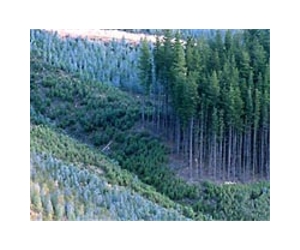
Creating consumer markets for forest-grown products, reducing nonpoint source pollution, protecting waterfowl habitat, diversifying farm operations-these are just a few of the ways agroforestry is moving to the forefront of the land-use discussion in North America. A new edition of "North American Agroforestry: An Integrated Science and Practice," published by the American Society of Agronomy adds to the excitement and builds upon the science. Agroforestry can create greater economic value, enhance biodiversity, and improve soil, water and air quality on many sites. It brings together leading scientists who explain the basic concepts and ecological foundations of agroforestry, present specific management practices and strategies, and discuss economic and policy issues. From large-scale installations of riparian buffers to family-scale forest farming, agroforestry is a technology that has truly "come of age." According to the authors, there is a willingness to adopt agroforestry practices more so than ever before. Agroforestry provides many opportunities to meet the needs of landowners and natural resource professionals while keeping the family farm economically viable and the environment in which we live healthy. "The American Society of Agronomy is proud to publish this truly interdisciplinary work that explains the integration of production agriculture, natural resource management, and forest production technologies into systems that enhance productivity and natural resource conservation. I am certain that millions of hectares of land and millions of people will benefit from the knowledge brought together in this book," says Marcus M. Alley, president of the American Society of Agronomy. Readers of the 400-page, hardcover book will learn the fundamentals of the main agroforestry practices, with detailed case studies and examples, as well as strategies for addressing the financial viability of new practices, marketing, and navigating policy. New topics in this edition include tree-crop interactions, product markets and marketing, and wildlife benefits. Each chapter includes a set of study questions. The authors of the 13 chapters are recognized authorities in their fields, and their chapters represent the state-of-the-art on each topic. Taken collectively, these writings clearly demonstrate that agroforestry has the potential to advance North America's land stewardship by converting degraded lands, protecting sensitive lands, and diversifying farm and forest production components and systems. "When properly designed and integrated, agroforestry can protect crops and improve crop yields, shelter livestock, reduce animal stress while improving weight gain, and enhance resource stewardship and land conservation," says the book's editor, H.E. "Gene" Garrett, Center for Agroforestry, the School of Natural Resources, University of Missouri-Columbia.
Related Links American Society of Agronomy (ASA) Farming Today - Suppliers and Technology
|
|
|
| The content herein, unless otherwise known to be public domain, are Copyright 1995-2014 - Space Media Network. AFP, UPI and IANS news wire stories are copyright Agence France-Presse, United Press International and Indo-Asia News Service. ESA Portal Reports are copyright European Space Agency. All NASA sourced material is public domain. Additional copyrights may apply in whole or part to other bona fide parties. Advertising does not imply endorsement,agreement or approval of any opinions, statements or information provided by Space Media Network on any Web page published or hosted by Space Media Network. Privacy Statement |
 del.icio.us
 Digg
Digg Reddit
 Google