


|
|
|
|
|
|
|
|
|
|
|


| . |  |
. |
|
|
|
 by Staff Writers Providence, R.I. (UPI) Jul 21, 2010
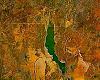
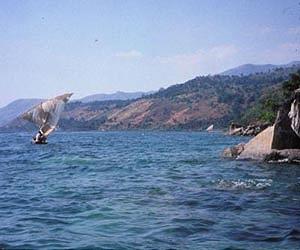
Africa's Lake Tanganyika, the second-oldest and second-deepest lake on Earth, is warmer now than it has been in 1,500 years, scientists say. Experiencing unprecedented warming during the last century, the lake's surface waters are the warmest on record, LiveScience.com reported Wednesday. The warmer waters are linked to a decrease in the lake's productivity, affecting fish stocks depended upon by millions of people in the region, researchers say. Rift lakes like Tanganyika are created when two of Earth's continental plates move apart, expand and eventually become ocean basins over millions of years. Lake Tanganyika is 13 million years old and nearly a mile deep. The world's deepest lake is Lake Baikal in Siberia, at 5,387 feet deep. A high average temperature in the lake of 78.8 degrees Fahrenheit, measured in 2003, is the warmest the lake has been in a millennium and a half, LiveScience reported. The high temperatures worry scientists looking at the estimated 10 million people who live near the lake and depend on fishing for their diet and livelihood. "Our data show a consistent relationship between lake surface temperature and productivity (such as fish stocks)," said geologist Jessica Tierney of Brown University. "As the lake gets warmer we expect productivity to decline, and we expect that it will affect the fishing industry." Lake Tanganyika is bordered by Burundi, the Democratic Republic of Congo, Tanzania and Zambia, four of the poorest countries in the world according to the U.N. Human Development Index.
earlier related report The two-million-euro (2.6-million-dollar) trial run, which will continue until October 2011, in the depressed Lausitz mining region is one of several experimental attempts in the sector using algae to slash carbon dioxide output. "The microalgae use climate-killing CO2 to create valuable biomass," the chairman of Vattenfall Europe Mining and Generation, Hartmuth Zeiss, said in a statement. "Moreover the new technology will bring useful know-how to the Lausitz and increase its importance as a region for energy production." Half the funding for the project called green MiSSiON (Microalgae Supported CO2 Sequestration in Organic Chemicals and New Energy) comes from Vattenfall, the other half from state and European Union subsidies. The gas emitted at the Senftenberg brown-coal-fired plant is being pumped through a kind of broth using algae cultivated in 12 plastic tanks. "The aim is to find out what kinds of algae work with brown coal dust and then, how economical this kind of CO2 reduction is," a spokesman for the Vattenfall division, Axel Happe, told AFP. The biomass produced in the process can be used to produce biodiesel, to feed biogas power plants and as a nutritious supplement in fish food, Happe said. He said it was difficult to quantify the amount of CO2 emissions normally emitted at Senftenberg or estimate how sizeable the reduction could be with the use of algae, which can scrub 10 times as much CO2 as land-based plants. But he said the company aimed to publish initial results in late 2011. A project at the Massachusetts Institute of Technology in 2008 found that diverting CO2 through an algae broth could reduce emissions by as much as 85 percent. Vattenfall is the third biggest electricity provider in Germany. Last month, European aerospace giant EADS unveiled what it called the world's first "hybrid" aircraft to run on algae fuel.
Related Links Water News - Science, Technology and Politics
|
|
|
| The content herein, unless otherwise known to be public domain, are Copyright 1995-2014 - Space Media Network. AFP, UPI and IANS news wire stories are copyright Agence France-Presse, United Press International and Indo-Asia News Service. ESA Portal Reports are copyright European Space Agency. All NASA sourced material is public domain. Additional copyrights may apply in whole or part to other bona fide parties. Advertising does not imply endorsement,agreement or approval of any opinions, statements or information provided by Space Media Network on any Web page published or hosted by Space Media Network. Privacy Statement |
 del.icio.us
 Digg
Digg Reddit
 Google