|
 |
 |
 |
 |
 |
 |
 |
 |
 |

| . |  |
. |
Memory-Enhancing Drugs For Elderly May Impair High-Level Brain Function
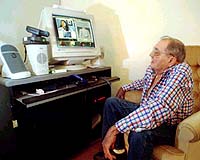
A new study cautions that drugs being designed to enhance some forms of memory in the elderly may actually worsen working memory, such as the cognitive ability to hold a phone number in mind long enough to dial it. The research, published online in Neuron on November 5, analyzes the effects of these drugs on multiple brain regions and suggests that the medications may actually have hazardous consequences on higher- order thought processes that are regulated by the prefrontal cortex. The hippocampus has been associated with long-term memory formation, while the prefrontal cortex has been associated with working memory. In a healthy brain, the two brain systems work together to optimize cognitive abilities. Compounds that increase the activity of an enzyme called protein kinase A (PKA) improve long-term hippocampal- dependent memory in aged mice and have been proposed as possible therapeutics for memory deficits in elderly humans. Because aging impairs both hippocampal-dependent and prefrontal memory function, Dr. Amy F.T. Arnsten, Dr. Ronald S. Duman, and colleagues from Yale University investigated how agents that increase PKA activity influence prefrontal cortical function in animals. The researchers observed that, in contrast to hippocampal-dependent long-term memory, dynamic working memory in older animals is impaired by PKA stimulation and enhanced by PKA inhibition. Moreover, they found that PKA is disinhibited in the prefrontal cortex of aged rats with naturally occurring working memory deficits. The researchers conclude that aging has diverse effects on different brain regions-specifically, decreasing PKA activity in the hippocampus and increasing it in the prefrontal cortex. These observations suggest that compounds designed to increase PKA activity may exacerbate age-dependent decline in working memory. According to Dr. Arnsten, "We need to respect the diverse chemical needs of higher cortical brain regions if we are to develop effective cognitive enhancers for the elderly." Related Links Yale Unversity SpaceDaily Search SpaceDaily Subscribe To SpaceDaily Express  Possible To Conceive And Give Birth To A Child In Space
  Moscow - Nov 05, 2003
It is quite possible to conceive, bear and give birth to a healthy child during a space flight. An expert of the Russian Institute of Medical Sciences and Biology Lyubov Serova told RIA Novosti in an interview published Saturday.
|
|
| |||||||||
| The content herein, unless otherwise known to be public domain, are Copyright 1995-2016 - Space Media Network. All websites are published in Australia and are solely subject to Australian law and governed by Fair Use principals for news reporting and research purposes. AFP, UPI and IANS news wire stories are copyright Agence France-Presse, United Press International and Indo-Asia News Service. ESA news reports are copyright European Space Agency. All NASA sourced material is public domain. Additional copyrights may apply in whole or part to other bona fide parties. Advertising does not imply endorsement, agreement or approval of any opinions, statements or information provided by Space Media Network on any Web page published or hosted by Space Media Network. Privacy Statement All images and articles appearing on Space Media Network have been edited or digitally altered in some way. Any requests to remove copyright material will be acted upon in a timely and appropriate manner. Any attempt to extort money from Space Media Network will be ignored and reported to Australian Law Enforcement Agencies as a potential case of financial fraud involving the use of a telephonic carriage device or postal service. |