|
 |
 |
 |
 |
 |
 |
 |
 |
 |

| . |  |
. |
Robonaut Developing A Smarter More Sensitive Side
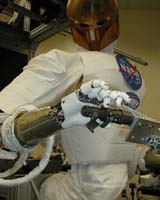
In the not-so-distant future, the hand tightening bolts during space structure assembly might not be human. Tomorrow's astronauts will find themselves working side by side in space with human-like robots called "Robonauts." And while the faceless machines might look a little strange, these Robonauts are really quite sensitive. Don't expect to see them making the rounds on the talk-show circuit discussing their feelings, though. Their kind of sensitivity is strictly high-tech. Now the technology bringing these Space-Age helpers to life is also at work in some surprising places. One common element drives these innovations, both on Earth and in space: sensors. When the Robonaut was on the drawing board at NASA's Johnson Space Center in Texas, developers needed advanced sensors to measure the movements of the human-like hands and forearms they were designing. These "hands" had to be capable of exerting just the right amount of force and control to perform critical jobs. They needed to mirror the skillfulness of a human hand. For example, when a person reaches out, picks up a foam cup filled with coffee and lifts it to drink, the hand responds automatically. The fingers close around the cup with the right amount of grip to pick it up without crushing the cup or dropping it. To simulate this kind of control in the hands of the Robonaut, Astro Technology, in Houston, developed the Fiber-Optic Sensor System. This system design overcomes some of the limitations of older robotic methods that were more cumbersome. The new fiber-optic sensors use a light source, so they are immune to electrical "noise" and require significantly less cabling to measure the bending of the "fingers" and force of the touch. Add to this the reduced size and weight of the components, and they are ideal for space flight and operation. This not only is great news for Robonaut, but these NASA-inspired innovations are also paving the way for some important commercial uses for the fiber-optic sensors. The sensors may help to tap new deepwater oil reserves around the world. This would ensure a flow of fuel for the future, while protecting the environment by preventing catastrophic pipeline failure. Astro Technology's engineers adapted the system to provide this new monitoring capability to the oil and gas industry. The sensors can measure fatigue on undersea pipelines, as well as offshore drilling and oil production rigs. The system can use the risk management software the company developed to calculate and predict repair needs. Other industrial uses envisioned for these super-sensors may include aircraft structural monitoring and auto industry applications. Virtually any situation requiring small but accurate monitoring sensors might benefit from the technology. Meanwhile in space, these sensors will continue supporting current and future development of the Robonauts. The software could also be adapted to help monitor other critical elements of space vehicle structures and their propellant lines for added safety. So whether in space, on Earth or under the sea, NASA's "sensitive" technology is lending a hand. Related Links Spinoff Online: Commercialized NASA Technology NASA Connections to Everyday Life SpaceDaily Search SpaceDaily Subscribe To SpaceDaily Express  Carnegie Mellon's Robot-Based System Detects Life In Chile's Atacama Desert
 Pittsburgh PA (SPX) Mar 16, 2005
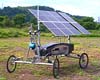
A unique rover-based life detection system developed by Carnegie Mellon University scientists has found signs of life in Chile's Atacama Desert, according to results being presented at the 36th Lunar and Planetary Science Conference March 14-18 in Houston.
|
|
| |||||||||
| The content herein, unless otherwise known to be public domain, are Copyright 1995-2016 - Space Media Network. All websites are published in Australia and are solely subject to Australian law and governed by Fair Use principals for news reporting and research purposes. AFP, UPI and IANS news wire stories are copyright Agence France-Presse, United Press International and Indo-Asia News Service. ESA news reports are copyright European Space Agency. All NASA sourced material is public domain. Additional copyrights may apply in whole or part to other bona fide parties. Advertising does not imply endorsement, agreement or approval of any opinions, statements or information provided by Space Media Network on any Web page published or hosted by Space Media Network. Privacy Statement All images and articles appearing on Space Media Network have been edited or digitally altered in some way. Any requests to remove copyright material will be acted upon in a timely and appropriate manner. Any attempt to extort money from Space Media Network will be ignored and reported to Australian Law Enforcement Agencies as a potential case of financial fraud involving the use of a telephonic carriage device or postal service. |