|
 |
 |
 |
 |
 |
 |
 |
 |
 |

| . |  |
. |
On The Centenary Of Powered Flight
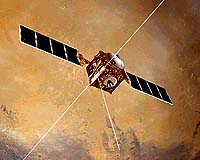
One hundred years ago at Kitty Hawk, North Carolina, USA, on December 17 1903 Orville Wright made the world's first manned, powered and controlled flight by a heavier-than-air vehicle. His fourth flight of the day lasted fifty-nine seconds and he flew 259 metres. On 17 December 2003, as Europe's Mars Express nears arrival at the Red Planet, it has made the one of the fastest ever trips from Earth to another planet. Mars is 150 million kilometres from Earth and the journey has taken only 205 days. We have seen a lot in the first hundred years of powered aviation and it is wonderful to celebrate how far we come in this short time, with many achievements by European pioneers, such as Bleriot's first crossing of the English Channel and Frank Whittle's development of the jet engine. However, ESA's Mars Express and the US Mars missions find their roots in a completely different pioneering heritage. The technologies of aviation and 'astronautics', the science of space travel, actually share little common history. Astronautics is based on the science of ballistics -- how an object leaves the ground, travels up in an arc, then downwards to land -- and this story starts a long time before 1903. By about 200 BC, the Chinese had mastered the mixing and use of charcoal, saltpetre and sulphur (gunpowder) to be the primary ingredient of the first true ballistic rockets. In 994 AD, the Chinese used fire arrows in battle. Fire arrows were traditional feathered arrows propelled by ignited gunpowder in a tube tied to the arrow. In 1258, the Mongols were reported to have used gunpowder-propelled fire arrows in their effort to capture Baghdad. Use of these weapons quickly spread throughout Asia and Europe, and scientific papers on the preparation of gunpowder were being published in Europe. In 1379, an Italian named Muratori used the word 'rochetta' when he described types of gunpowder-propelled fire arrows used in medieval times. This is believed to be the first use of the word later translated in English as 'rocket'. Several hundred years of experimentation had to pass before Robert Goddard launched the first liquid-fuelled rocket in 1926. Another subject covered by astronautics is 'orbital mechanics', which deals with how objects such as planets and spacecraft travel in space. The first real understanding of orbital mechanics came in 1530, when Nicolas Copernicus, the founder of modern astronomy, completed his great work De Revolutionibus. He said that the planets, including Earth and Mars, travel around the Sun: a fantastic concept for the times. A succession of European astronomers then studied the Solar System, making many important findings about Mars. Tycho Brahe was the first to accurately map the motions of Mars in the sky. Johannes Kepler first worked out the orbit of Mars. Galileo Galilei was the first to observe Mars through a telescope. Perhaps the most far reaching development in rocketry and orbital mechanics, if not in all of science, occurred in 1687 when Sir Isaac Newton published what became known as the 'Universal Laws Of Motion'. Newton's Third Law stated 'For every action there is an equal and opposite reaction', the fundamental principle behind rocket propulsion. These are the basic ingredients for a trip to Mars, or to any other planetary body. All that is then needed is the human spirit to make the journey. So far, Europe has never sent its own spacecraft to Mars -- until now. The Mars Express orbiter and its Beagle 2 lander carry this spirit and will play key roles in an international exploration programme spanning the next two decades. Related Links Mars Express Beagle 2 SpaceDaily Search SpaceDaily Subscribe To SpaceDaily Express  USU Wright Flyer To Fly On 100th Anniversary Of Powererd Flight
 Logan - Dec 11, 2003
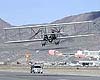
The Utah State University Wright Flyer will take to the skies Wednesday, Dec. 17, at the Brigham City Airport between 10 a.m. and 12 noon, to celebrate the 100th anniversary of powered flight.
|
|
| |||||||||
| The content herein, unless otherwise known to be public domain, are Copyright 1995-2016 - Space Media Network. All websites are published in Australia and are solely subject to Australian law and governed by Fair Use principals for news reporting and research purposes. AFP, UPI and IANS news wire stories are copyright Agence France-Presse, United Press International and Indo-Asia News Service. ESA news reports are copyright European Space Agency. All NASA sourced material is public domain. Additional copyrights may apply in whole or part to other bona fide parties. Advertising does not imply endorsement, agreement or approval of any opinions, statements or information provided by Space Media Network on any Web page published or hosted by Space Media Network. Privacy Statement All images and articles appearing on Space Media Network have been edited or digitally altered in some way. Any requests to remove copyright material will be acted upon in a timely and appropriate manner. Any attempt to extort money from Space Media Network will be ignored and reported to Australian Law Enforcement Agencies as a potential case of financial fraud involving the use of a telephonic carriage device or postal service. |