|
 |
 |
 |
 |
 |
 |
 |
 |
 |

| . |  |
. |
by Andrew Cheng NEAR Project Scientist Laurel - March 22, 2000 - Last week the NEAR spacecraft was renamed "NEAR Shoemaker," in honor of the late Eugene M. Shoemaker, a pioneer in the study of asteroid and comet impacts on Earth and other planets. It is largely because of Gene's work that we know that the famous Meteor Crater in Arizona (also called Barringer Crater) was indeed created by the impact of a 15-meter iron-rich meteoroid and not by a volcano. While many scientists suspected an impact origin, including Barringer himself, it was Shoemaker and his colleague Chao's discovery of the high pressure silicate mineral coesite that finally convinced skeptics. Gene was also heavily involved in the Apollo missions that resolved one of the leading scientific controversies of our time, whether the craters on the Moon were formed by volcanoes or by impacts. We now know that the surface of the Moon is actually saturated with impact craters and that even the largest features we see, those that make up the "man in the moon", lie within the scars of giant impacts. These features are dark because, later in the moon's history, the giant impact scars were filled with volcanic lavas. The Moon's surface records a period of violent bombardment in the early history of the solar system, a bombardment which the Earth itself did not escape. Of course, on Earth the record of ancient giant impacts has been mostly erased by the actions of weather and plate tectonics. Gene was among the first to recognize the importance of large impacts for the geologic history of the Earth and for the evolution of life on Earth. Since the projectiles that bombarded the Moon, the Earth, and other terrestrial planets were asteroids and comets, Gene initiated telescopic observing programs to search for such objects in orbits close to Earth's orbit (that is, near-Earth asteroids and comets) as well as in more distant orbits. He and David Levy discovered the comet Shoemaker-Levy 9 that plunged into Jupiter in 1994, after splitting into more than 20 fragments, temporarily creating dark spots in Jupiter's clouds larger than the Earth.
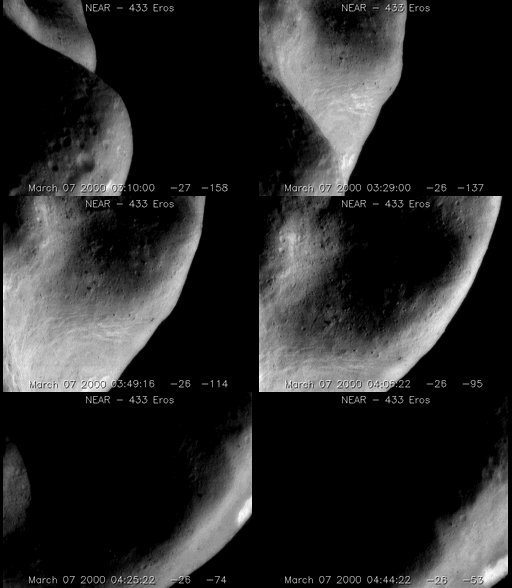
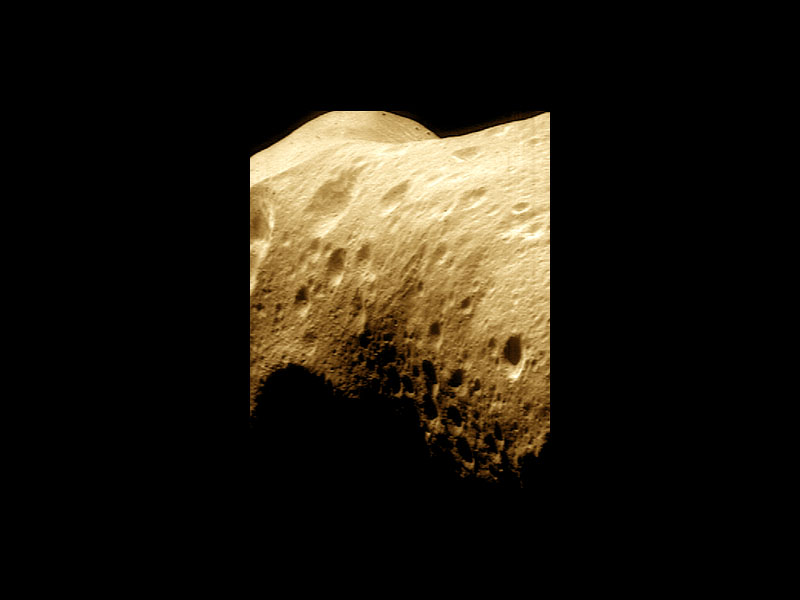
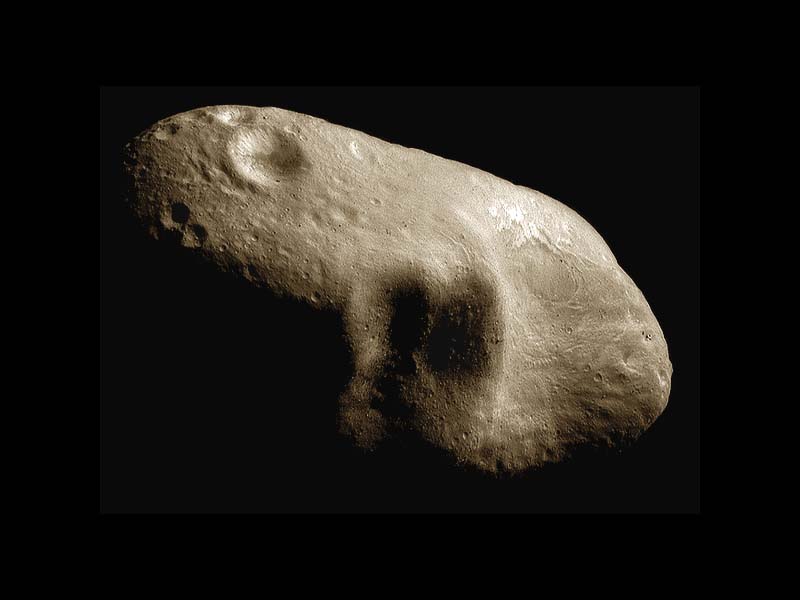
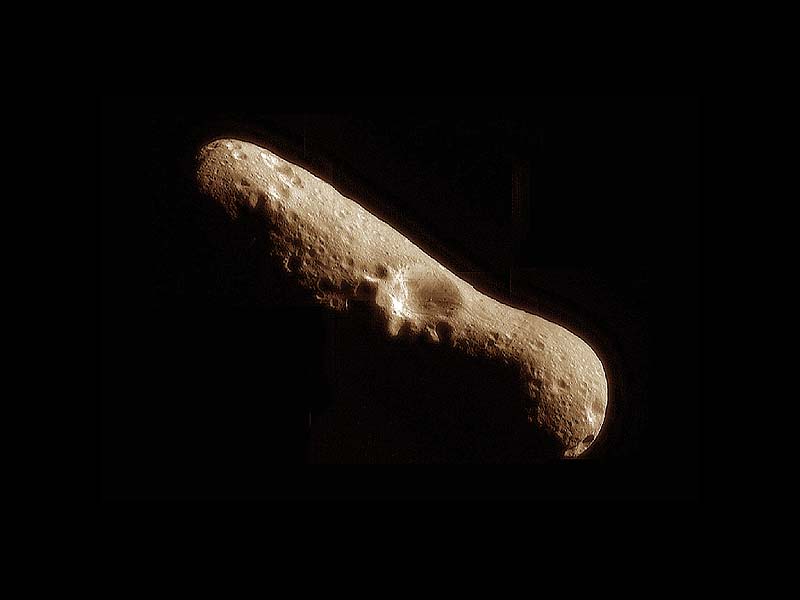
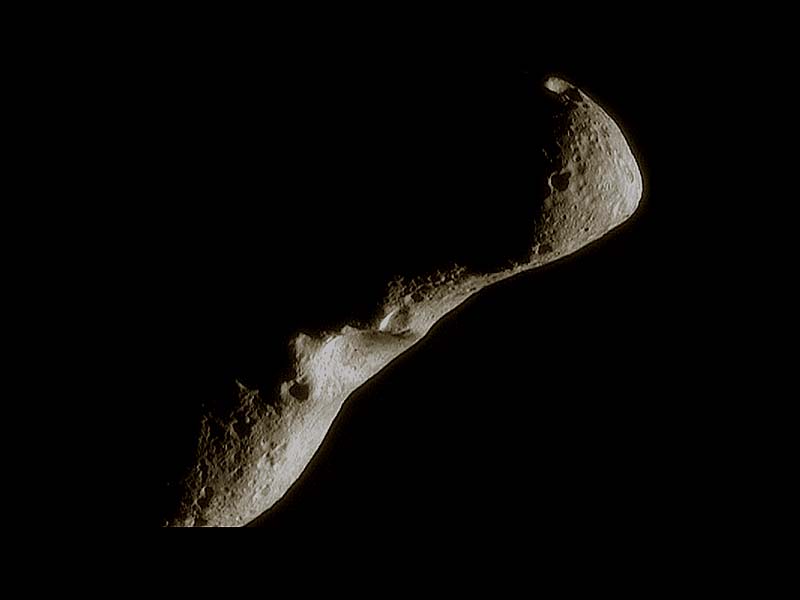
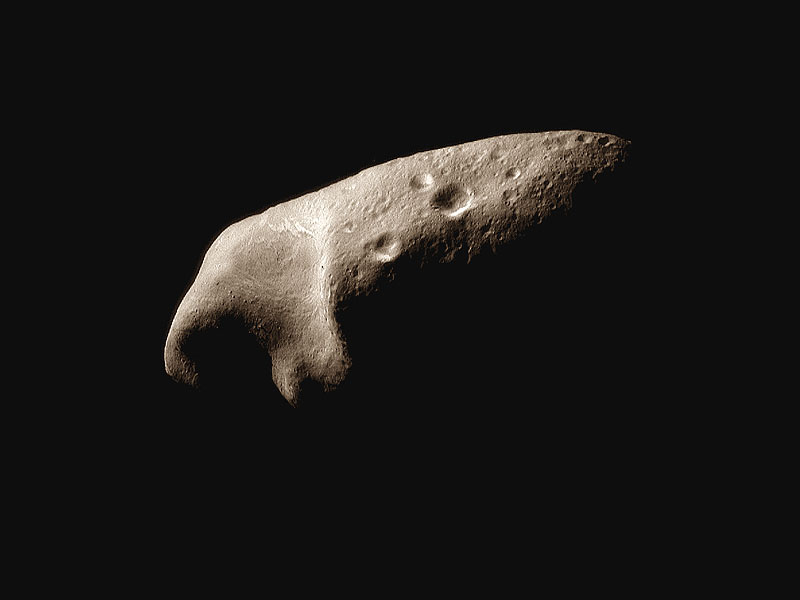
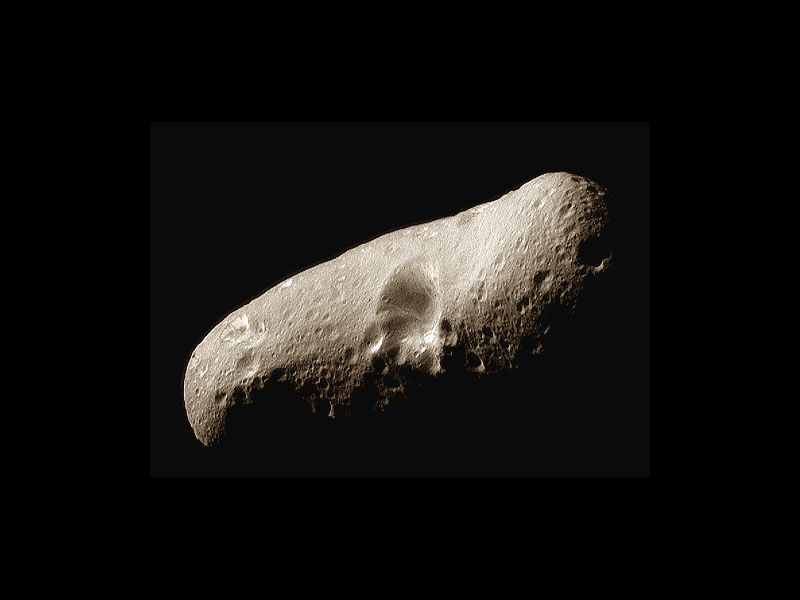
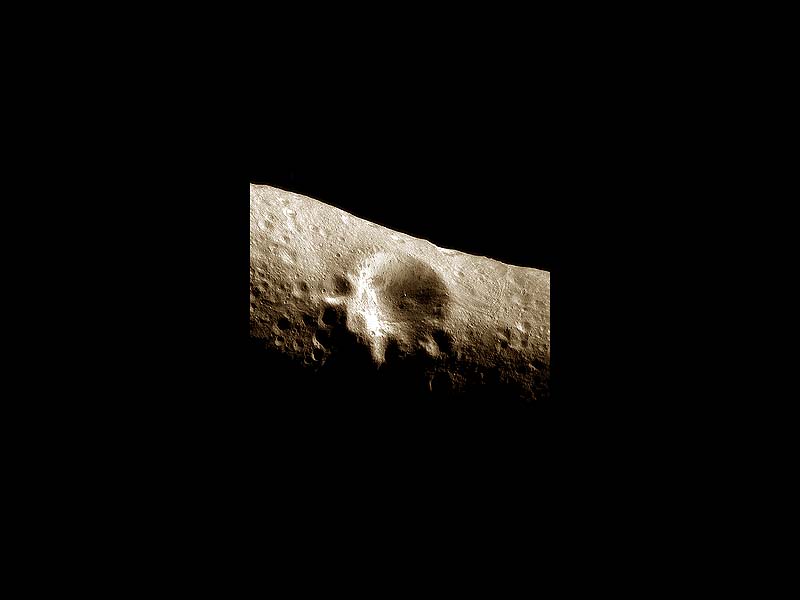
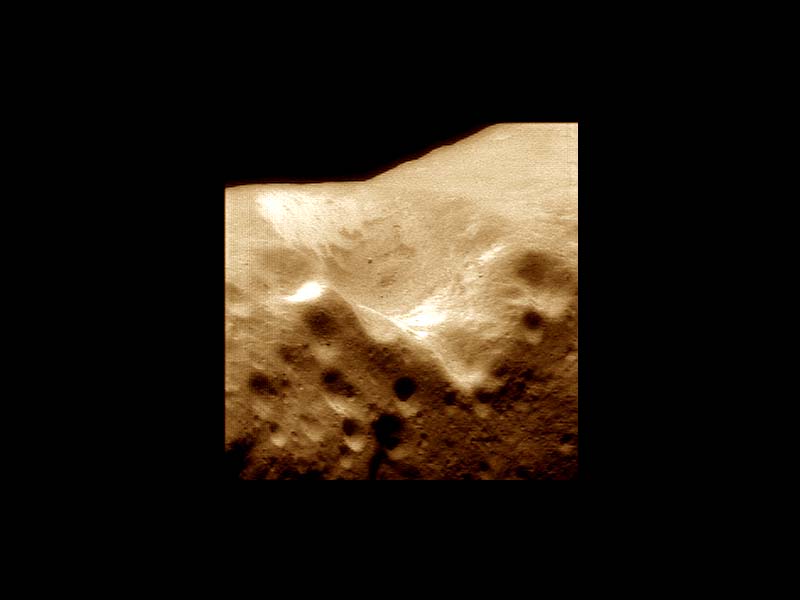
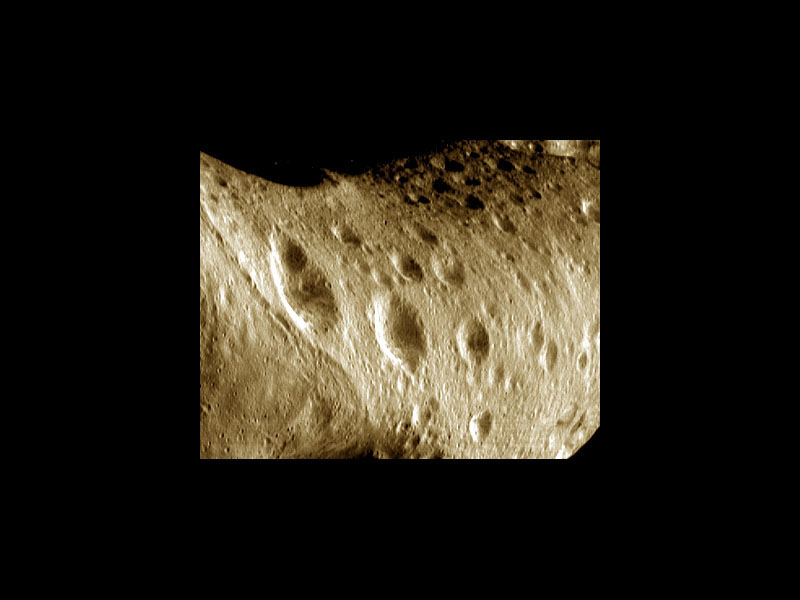
We all have the experience of driving through a roadcut on the highway and looking at exposed layers of sediment or rock on either side, which would reveal something of the geologic history of that particular site. How appropriate it is that we now see fantastic systems of linear features - ridges, grooves, and chains of craters or pits - all around the surface of Eros. Were the linear features formed by ancient geologic activity on the parent body of Eros, making Eros possibly a 'roadcut' through the parent body from which it was derived? Or were the linear features formed by later processes? Our task is now to find the evidence that would indicate which of these possibilities may be correct. One important line of evidence will come from NEAR's x-ray and gamma-ray spectrometers, which will measure the elemental compositions of surface materials. Last week, NEAR recorded the first detections of x-ray emissions from an asteroid. NEAR's x-ray spectrometer was able to identify emission from the elements silicon, aluminum, magnesium, calcium and iron during a large solar flare on March 2, 2000. The flare bombarded the asteroid's surface with an unusually high intensity of x-rays, enabling NEAR's x-ray spectrometer to detect the asteroid emissions at a range of more than 200 kilometers from the surface. From that one observation, we were not able to determine quantitative abundances of these elements, which is the information that might tell us whether Eros is from a differentiated parent body (one large enough to have melted in the interior and separated into heavier and lighter constituents) or from a more primitive parent body. We'll have to be patient and await more observations, especially from the lower orbits where the x-ray and gamma ray spectrometers were designed to operate. Gene would have had difficulty with the notion of being patient at Eros - he wanted to go there and bang on it with a hammer - but he would have understood.
NEAR NEWS
|
|
| ||||||||||
| The content herein, unless otherwise known to be public domain, are Copyright 1995-2016 - Space Media Network. All websites are published in Australia and are solely subject to Australian law and governed by Fair Use principals for news reporting and research purposes. AFP, UPI and IANS news wire stories are copyright Agence France-Presse, United Press International and Indo-Asia News Service. ESA news reports are copyright European Space Agency. All NASA sourced material is public domain. Additional copyrights may apply in whole or part to other bona fide parties. Advertising does not imply endorsement, agreement or approval of any opinions, statements or information provided by Space Media Network on any Web page published or hosted by Space Media Network. Privacy Statement All images and articles appearing on Space Media Network have been edited or digitally altered in some way. Any requests to remove copyright material will be acted upon in a timely and appropriate manner. Any attempt to extort money from Space Media Network will be ignored and reported to Australian Law Enforcement Agencies as a potential case of financial fraud involving the use of a telephonic carriage device or postal service. |