
 |
 |
 |
 |
 |
 |
 |
 |
 |
 |

| . |  |
. |
|
NEAR Begins To Return Eros Science by Simon Mansfield 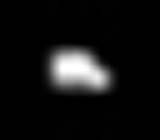 Laurel - January 18, 2000
During the next month as NEAR approaches at about 75 kilometers an hour the asteroid will appear progressively larger in images returned from the spacecraft. As a result science operations are now moving into high gear. Each day since Sunday, images of Eros have been successfully obtained. These distant image sequences had three objectives: to confirm the location of Eros in the sky as seen from the spacecraft, to search for satellites of Eros, and to measure its brightness variations. This is done to see whether Eros is in the expected part of the sky so as to confirm that NEAR is headed in the proper trajectory -- a process called 'optical navigation'. NEAR is also on the lookout for any natural moons in orbit about Eros. No moon have been detected about Eros, but several have been found in orbit about the asteroids Ida and Eugenia. If Eros has a moon, it's critical as much information is gathered on it before NEAR enter orbit. Of course, once NEAR goes into orbit around Eros, it will become the first artificial moon of an asteroid. Brightness variations of Eros -- called 'lightcurve' measurements -- are also underway. Eros is an elongated, kidney-bean shaped object as it rotates, greater areas are lit by the sun and Eros appears brighter, but sometimes smaller areas are lit and Eros appears dimmer. Especially large lightcurve variations are observable when Eros rotates between broadside to the sun and narrow end to the sun -- Eros is not in that geometry now, but will be later this year. Eros lightcurve observations are then used to refine our knowledge of Eros's rotation. The other instrument teams on NEAR have also been busy. The laser rangefinder test mentioned last week was completely successful There was also a successful calibration of the near infrared spectrometer.
On February 14 NEAR is scheduled to fire its thrusters and begin to orbit Eros, becoming the first artificial satellite of any asteroid.
NEAR NEWS
|
|
| ||||||||
| The content herein, unless otherwise known to be public domain, are Copyright 1995-2016 - Space Media Network. All websites are published in Australia and are solely subject to Australian law and governed by Fair Use principals for news reporting and research purposes. AFP, UPI and IANS news wire stories are copyright Agence France-Presse, United Press International and Indo-Asia News Service. ESA news reports are copyright European Space Agency. All NASA sourced material is public domain. Additional copyrights may apply in whole or part to other bona fide parties. Advertising does not imply endorsement, agreement or approval of any opinions, statements or information provided by Space Media Network on any Web page published or hosted by Space Media Network. Privacy Statement All images and articles appearing on Space Media Network have been edited or digitally altered in some way. Any requests to remove copyright material will be acted upon in a timely and appropriate manner. Any attempt to extort money from Space Media Network will be ignored and reported to Australian Law Enforcement Agencies as a potential case of financial fraud involving the use of a telephonic carriage device or postal service. |
 Laurel - January 18, 2000 - The photo album of "NEAR's trip to Eros" has a new page: the first image from the spacecraft's approach to the asteroid. Taken January 12, with NEAR's Multispectral Imager, the picture was posted today on the NEAR Web site. More photos will follow in the weeks leading up to NEAR's Feb. 14 rendezvous with Eros.