|
 |
 |
 |
 |
 |
 |
 |
 |
 |

| . |  |
. |
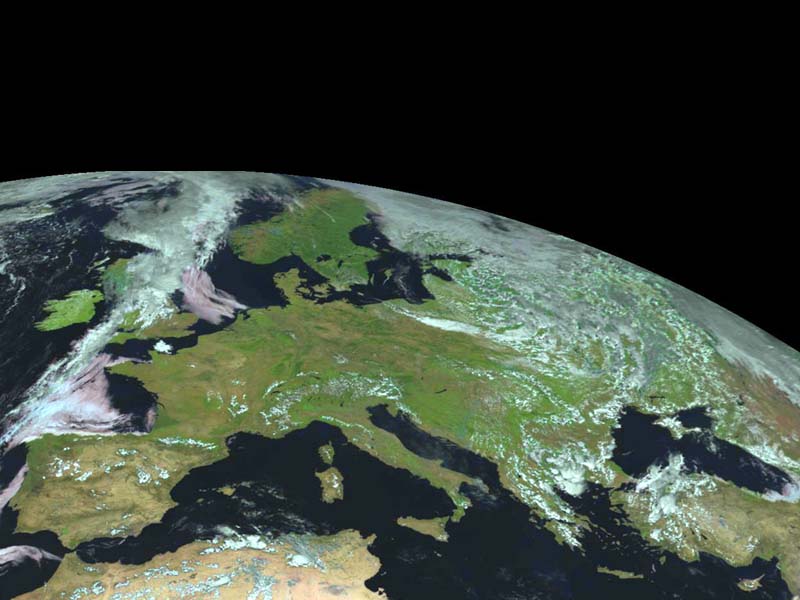
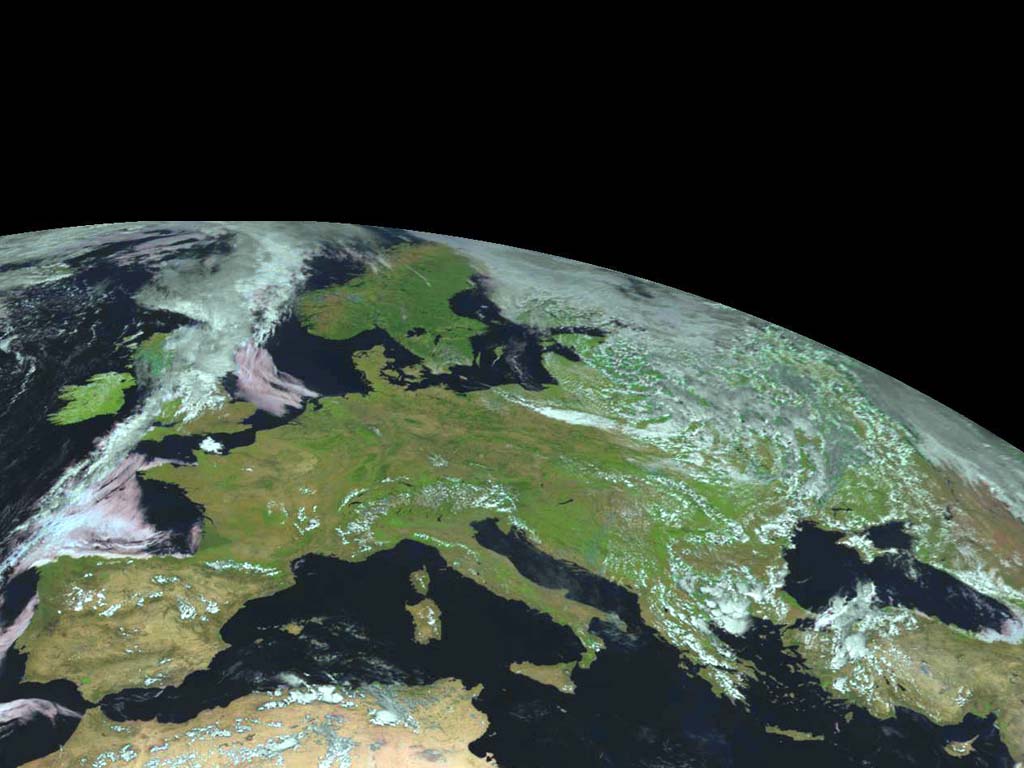
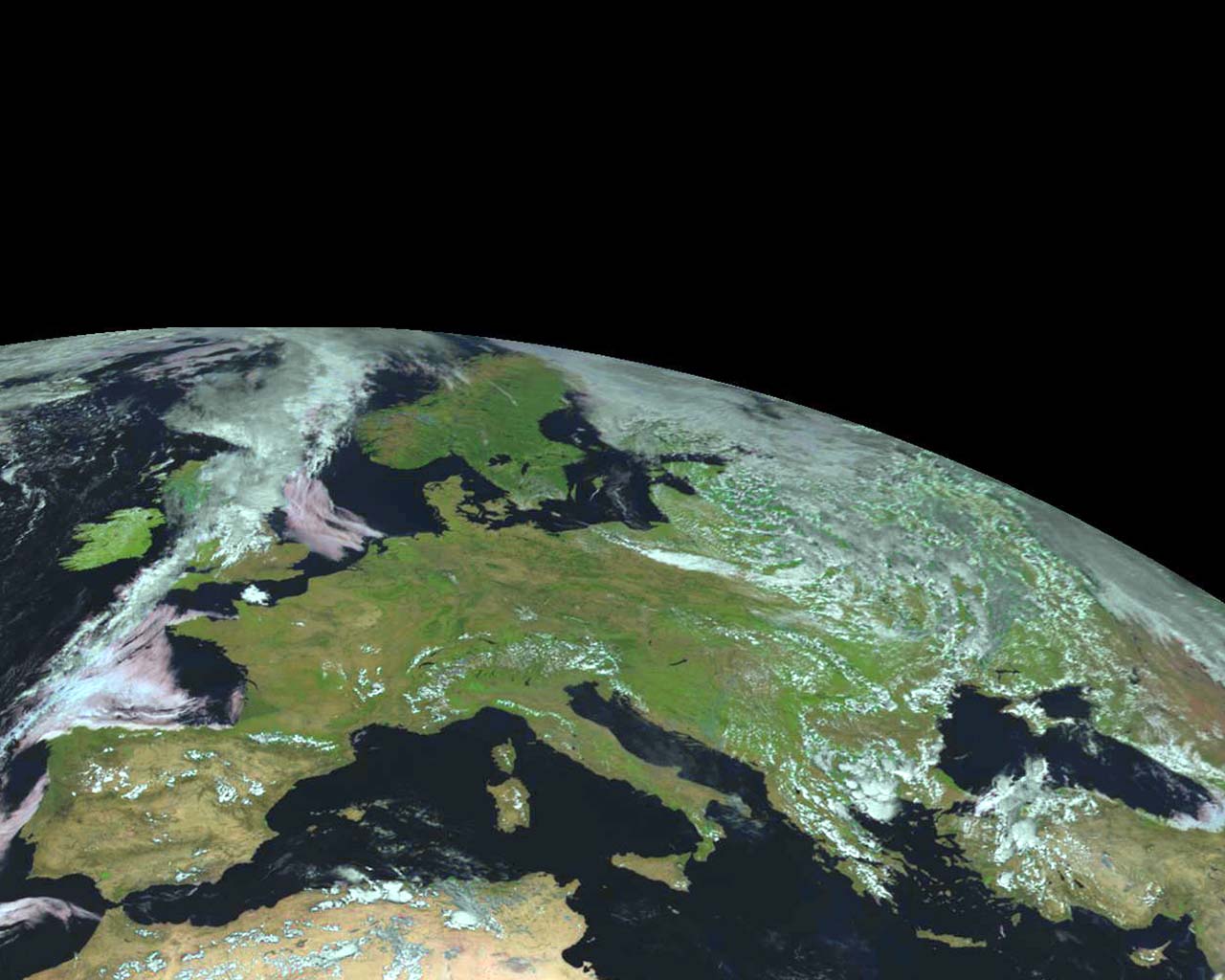
MSG-1 Captures Rare Cloud-Free View of Europe
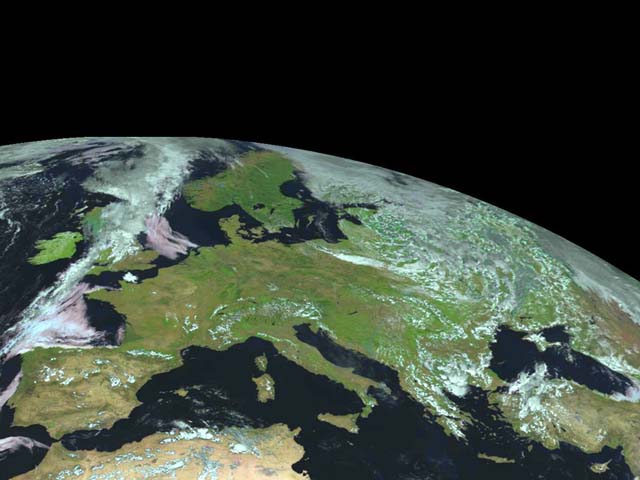
As most Europeans breathe a sigh of relief as this record-breaking summer draws to a close, the extreme weather conditions experienced in recent weeks have given us a rare view of an almost cloud-free Europe, taken by Europe's weather satellite MSG-1, launched a year ago this week. This enhanced composite image was taken on 10 August 2003, at midday (12:00 UT) and shows a virtually cloud-free Europe. Only the UK and Finland are partially obscured by cloud. Meteosat Second Generation 1 (MSG-1) is the first of a new generation of weather satellites, developed in close cooperation between the European Space Agency (ESA) and EUMETSAT, the European Organisation for the Exploitation of Meteorological Satellites. Built by ESA and operated by EUMETSAT, MSG-1 was launched by Ariane, a year ago on 28 August at 22:45 UT, from Europe's spaceport in French Guiana. MSG-1 is positioned in geostationary orbit, at 10.5 deg W 36,000 kilometres above the Earth. This image illustrates the excellent performance of the innovative radiometer carried by MSG-1. The MSG system will provide an essential service for weather experts for at least the next 12 years. This continuity of service is important not only to make short-term forecasts, but also to investigate global weather trends in the longer term. Related Links Meteosat Second Generation EUMETSAT SpaceDaily Search SpaceDaily Subscribe To SpaceDaily Express  NASA Observations Improve Hurricane Forecasts
 Hampton - May 28, 2003
With hurricane season approaching, scientists find that NASA observations can significantly improve predictions of both the direction and strength of hurricanes.
|
|
| |||||||||
| The content herein, unless otherwise known to be public domain, are Copyright 1995-2016 - Space Media Network. All websites are published in Australia and are solely subject to Australian law and governed by Fair Use principals for news reporting and research purposes. AFP, UPI and IANS news wire stories are copyright Agence France-Presse, United Press International and Indo-Asia News Service. ESA news reports are copyright European Space Agency. All NASA sourced material is public domain. Additional copyrights may apply in whole or part to other bona fide parties. Advertising does not imply endorsement, agreement or approval of any opinions, statements or information provided by Space Media Network on any Web page published or hosted by Space Media Network. Privacy Statement All images and articles appearing on Space Media Network have been edited or digitally altered in some way. Any requests to remove copyright material will be acted upon in a timely and appropriate manner. Any attempt to extort money from Space Media Network will be ignored and reported to Australian Law Enforcement Agencies as a potential case of financial fraud involving the use of a telephonic carriage device or postal service. |