|
 |
 |
 |
 |
 |
 |
 |
 |
 |

| . |  |
. |
Next Generation of TVs Going Mainstream
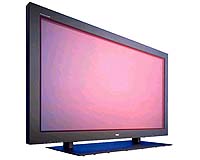
The future of television is big in more ways than one, according to The NPD Group report, "Taking Stock: The Consumer Perspective on Television Ownership." This report, based on a recent survey conducted by The NPD Group, explains the purchasing habits of consumers considering a television purchase, and how new technology features such as liquid crystal display (LCD) and plasma have become key factors in the decision-making and purchasing process. With the proliferation of digital television, interest in larger screen sizes utilizing LCD and plasma technologies has grown, capturing the imagination of the public and driving consumers back to stores to purchase the latest the industry has to offer. While glass tube televisions still remain the overwhelming majority of TV sets owned in America, the demand for televisions with larger displays and the latest technology is growing. Today, 6 percent of the market is made up of LCD televisions, with projection televisions commanding over 9 percent and plasma televisions representing 1 percent. When it comes to TV sets using the latest technologies, households with higher incomes tend to be the primary purchasers. For instance, while there is a 6 percent penetration for projection Tvs for those earning less than $50k per year, there is a 19 percent penetration in households earning above $100k per year. The pattern is similarly striking for plasma televisions, where penetration rises from less than 1 percent for those earning under $50k per year to 4.3 percent for those earning above $100k per year. "The sticker shock of new display technologies has kept most consumers from enjoying their incredible picture quality," said Ross Rubin, a director of industry analysis for The NPD Group. "However, as prices for these televisions fall, consumers are increasingly drawn to the design and versatility of their svelte profiles."
Screen Size
Premium Services
Viewing Habits and Satisfaction When looking at satisfaction, 66.1 percent of LCD owners and 68.3 percent of plasma owners rate their television experience as excellent. The most common gripe among LCD owners is that the device "does not go with decor" and for plasma owners, the most popular complaint was an inability to see the picture from certain angles. "While the three most important factors for consumers continue to be price, picture quality, and screen size, a television's aesthetics weigh heavily for most consumers," said Rubin. "In many cases, a television's design was more of a driver than its ability to receive high-definition TV signals."
Methodology Related Links NPD Group SpaceDaily Search SpaceDaily Subscribe To SpaceDaily Express  Organic Light Emitting Devices And Microdisplays Edge Closer To Reality
 San Jose - Apr 30, 2003
As the demand for clearer, sharper images continues to grow, the inherent flexibility of advanced display materials is opening doors for their use in a wide range of display applications.
|
|
| |||||||||
| The content herein, unless otherwise known to be public domain, are Copyright 1995-2016 - Space Media Network. All websites are published in Australia and are solely subject to Australian law and governed by Fair Use principals for news reporting and research purposes. AFP, UPI and IANS news wire stories are copyright Agence France-Presse, United Press International and Indo-Asia News Service. ESA news reports are copyright European Space Agency. All NASA sourced material is public domain. Additional copyrights may apply in whole or part to other bona fide parties. Advertising does not imply endorsement, agreement or approval of any opinions, statements or information provided by Space Media Network on any Web page published or hosted by Space Media Network. Privacy Statement All images and articles appearing on Space Media Network have been edited or digitally altered in some way. Any requests to remove copyright material will be acted upon in a timely and appropriate manner. Any attempt to extort money from Space Media Network will be ignored and reported to Australian Law Enforcement Agencies as a potential case of financial fraud involving the use of a telephonic carriage device or postal service. |