| . |  |
. |
| . | |
. |


NASA Investigates Revolutionary Space Exploration Concepts
The NASA Institute for Advanced Concepts (NIAC) has selected its 2005 Phase 1 awards. The Phase 1 awards are 12, six-month study proposals beginning in September that could revolutionize space exploration. If the concepts prove feasible, space explorers may one day deploy superconducting cables that magnetically inflate to form the structure of a space telescope one kilometer across; launch a satellite with a magnetic scoop to mine the radiation belts surrounding Earth for antimatter fuel; or enjoy a feast from a food replicator that creates a variety of meals from a few common ingredients. "These new Phase I awards have the potential for enabling future missions that are not thought to be possible with current systems. As a result of the process of exploring advanced concepts, new enabling technologies may be identified that could impact near-term plans and missions," said Dr. Robert Cassanova of the Universities Space Research Association (USRA). Cassanova is the NIAC director. The USRA runs NIAC for NASA. NIAC was created in 1998 to solicit revolutionary concepts from people and organizations outside the agency that could advance NASA's missions. The proposals push the limits of known science and technology, and positive results are not expected for at least a decade or more. Proposals selected for Phase 1 awards typically receive up to $75,000 for a six-month study that validates the viability of the concept and identifies challenges that must be overcome to make the proposal a reality.
Related Links NIAC SpaceDaily Search SpaceDaily Subscribe To SpaceDaily Express  Europe Pledges Support For Planned Russian Spacecraft
 Moscow, Russia (AFP) Jun 10, 2005
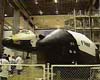
The European Space Agency (ESA) on Friday pledged its backing for Russia's plans for manned spacecraft called Kliper, the news agency Itar-Tass reported here. Daniel Sacotte, ESA's director of human spaceflight, microgravity and exploration programmes, said here his organisation "would support" the project, it said.
|
|
| |||||||||
| The content herein, unless otherwise known to be public domain, are Copyright 1995-2016 - Space Media Network. All websites are published in Australia and are solely subject to Australian law and governed by Fair Use principals for news reporting and research purposes. AFP, UPI and IANS news wire stories are copyright Agence France-Presse, United Press International and Indo-Asia News Service. ESA news reports are copyright European Space Agency. All NASA sourced material is public domain. Additional copyrights may apply in whole or part to other bona fide parties. Advertising does not imply endorsement, agreement or approval of any opinions, statements or information provided by Space Media Network on any Web page published or hosted by Space Media Network. Privacy Statement All images and articles appearing on Space Media Network have been edited or digitally altered in some way. Any requests to remove copyright material will be acted upon in a timely and appropriate manner. Any attempt to extort money from Space Media Network will be ignored and reported to Australian Law Enforcement Agencies as a potential case of financial fraud involving the use of a telephonic carriage device or postal service. |

