
 |
 |
 |
 |
 |
 |
 |
 |
 |
 |

| . |  |
. |
Surveyor Starts Final Aerobraking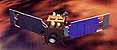 JPL - January 28, 1999 - Mars Global Surveyor began entered its final aerobraking phase, known as the "walk-out" phase. During this final stage of aerobraking, the spacecraft will be bumped higher in four four steps.
January 28 the spacecraft's orbit was raised from a closest approach of 100 kilometers (62.5 miles) to 103 kilometers (64.4 miles) above the planet's surface. As the closest approach, or periapsis, is adjusted, the spacecraft's apoapsis, or farthest point from Mars, will continue to diminish until Global Surveyor is in a two-hour orbit over the poles of the planet. The flight team at the Jet Propulsion Laboratory in Pasadena and Lockheed Martin Astronautics in Denver will uplink aerobraking sequences twice a day over the next six days to adjust both the nearest and farthest points of the spacecraft's orbit. These sequences will allow the spacecraft to execute one propulsive maneuver each day. The flight team will track Global Surveyor's altitude over the Martian surface during each of 12 daily passes through the Martian atmosphere.
Aerobraking is expected to end on February 4, when Global Surveyor will be instructed to fire its main rocket engine and raise its orbit completely out of the Martian atmosphere. The burn will be executed when the flight team has determined that the spacecraft's apoapsis has dropped from the current 1,000 kilometers (625 miles) to the designated 450 kilometers (279 miles) over the Martian surface. Mars Global Surveyor remains in excellent health more than two years after its launch. The magnetometer, one of six scientific instruments onboard the spacecraft, was turned off today for completion of the aerobraking phase. It will be turned on again on February 10, and the rest of the science payload will be powered on for calibration tests beginning on February 25. A "pre-mapping phase" in which the spacecraft will acquire one complete global map of Mars will be conducted March 8-28.
Surveyor Reports At SpaceDaily Mars 98 Reports From Spacer.Com Mission Links
Mars Coverage at Spacer.Com
Future Missions
Areography
Pathfinder
|
|
| ||||||||
| The content herein, unless otherwise known to be public domain, are Copyright 1995-2016 - Space Media Network. All websites are published in Australia and are solely subject to Australian law and governed by Fair Use principals for news reporting and research purposes. AFP, UPI and IANS news wire stories are copyright Agence France-Presse, United Press International and Indo-Asia News Service. ESA news reports are copyright European Space Agency. All NASA sourced material is public domain. Additional copyrights may apply in whole or part to other bona fide parties. Advertising does not imply endorsement, agreement or approval of any opinions, statements or information provided by Space Media Network on any Web page published or hosted by Space Media Network. Privacy Statement All images and articles appearing on Space Media Network have been edited or digitally altered in some way. Any requests to remove copyright material will be acted upon in a timely and appropriate manner. Any attempt to extort money from Space Media Network will be ignored and reported to Australian Law Enforcement Agencies as a potential case of financial fraud involving the use of a telephonic carriage device or postal service. |
