
 |
 |
 |
 |
 |
 |
 |
 |
 |
 |

| . |  |
. |
Digging Up The Secret's Of Mars
"We dug a nice big hole on Mars," said Jeffrey Biesiadecki, a rover planner at NASA's Jet Propulsion Laboratory, Pasadena, Calif. The rover alternately pushed soil forward and backward out of the trench with its right front wheel while other wheels held the rover in place. The rover turned slightly between bouts of digging to widen the hole. "We took a patient, gentle approach to digging," Biesiadecki said. The process lasted 22 minutes. The resulting trench -- the first dug by either Mars Exploration Rover -- is about 50 centimeters (20 inches) long and 10 centimeters (4 inches) deep. "It came out deeper than I expected," said Dr. Rob Sullivan of Cornell University, Ithaca, N.Y., a science-team member who worked closely with engineers to plan the digging. Two features that caught scientists' attention were the clotty texture of soil in the upper wall of the trench and the brightness of soil on the trench floor, Sullivan said. Researchers look forward to getting more information from observations of the trench planned during the next two or three days using the rover's full set of science instruments. Opportunity's twin rover, Spirit, drove 21.6 meters closer to its target destination of a crater nicknamed "Bonneville" overnight Monday to Tuesday. It has now rolled a total of 108 meters (354 feet) since leaving its lander 34 days ago, surpassing the total distance driven by the Mars Pathfinder mission's Sojourner rover in 1997. Spirit has also begun using a transmission rate of 256 kilobits per second, double its previous best, said JPL's Richard Cook. Cook became project manager for the Mars Exploration Rover Project today when the former manager, Peter Theisinger, switched to manage NASA's Mars Science Laboratory Project, in development for a 2009 launch. Spirit's drive toward "Bonneville" is based on expectations that the impact that created the crater "would have overturned the stratigraphy and exposed it for our viewing pleasure," said Dr. Ray Arvidson of Washington University in St. Louis, deputy principal investigator for the rovers' science instruments. That stratigraphy, or arrangement of rock layers, could hold clues to the mission's overriding question -- whether the past environment in the region of Mars where Spirit landed was ever persistently wet and possibly suitable for sustaining life. Both rovers have returned striking new pictures in recent days. Microscope images of soil along Spirit's path reveal smoothly rounded pebbles. Views from both rovers' navigation cameras looking back toward their now-empty landers show the wheel tracks of the rovers' travels since leaving the landers. Each martian day, or "sol" lasts about 40 minutes longer than an Earth day. Opportunity approaches its first month, while Spirit is set to exceed the two month mark in early March. The two rovers are halfway around Mars from each other. Based on a JPL and AstroBiology Magazine report Related Links Mars Rovers at JPL Mars Rovers at Cornell SpaceDaily Search SpaceDaily Subscribe To SpaceDaily Express  Opportunity Examines Trench As Spirit Prepares To Dig One
 Pasadena - Feb 20, 2004
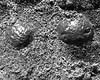
By inspecting the sides and floor of a hole it dug on Mars, NASA's Opportunity rover is finding some things it did not see beforehand, including round pebbles that are shiny and soil so fine-grained that the rover's microscope can't make out individual particles.
|
|
| |||||||||
| The content herein, unless otherwise known to be public domain, are Copyright 1995-2016 - Space Media Network. All websites are published in Australia and are solely subject to Australian law and governed by Fair Use principals for news reporting and research purposes. AFP, UPI and IANS news wire stories are copyright Agence France-Presse, United Press International and Indo-Asia News Service. ESA news reports are copyright European Space Agency. All NASA sourced material is public domain. Additional copyrights may apply in whole or part to other bona fide parties. Advertising does not imply endorsement, agreement or approval of any opinions, statements or information provided by Space Media Network on any Web page published or hosted by Space Media Network. Privacy Statement All images and articles appearing on Space Media Network have been edited or digitally altered in some way. Any requests to remove copyright material will be acted upon in a timely and appropriate manner. Any attempt to extort money from Space Media Network will be ignored and reported to Australian Law Enforcement Agencies as a potential case of financial fraud involving the use of a telephonic carriage device or postal service. |


