|
 |
 |
 |
 |
 |
 |
 |
 |
 |

| . |  |
. |
DNA Tests Refutes Neanderthal Ancestry Theory For Modern Humans
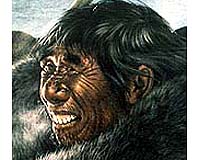
DNA analysis by researchers across Europe have yielded the best evidence yet Neanderthals made no significant genetic contributions to modern humans. The findings may help settle an ongoing debate on whether Homo neanderthalensis interbred enough with Homo sapiens when they coexisted -- from about 100,000 to 150,000 years ago -- to contribute to the modern human gene pool, said the researchers. The team, from Germany, France, Switzerland, Austria, Croatia and Sweden, tested mitochondrial DNA from 24 Neanderthal and 40 early modern human remains. The mtDNA, as it is called, is transferred only from mother to child. Despite the ages of the fossils, the researchers found four of the Neanderthals and five of the early humans contained enough mtDNA for comparison. Neanderthals lived roughly 150,000 to 30,000 years ago in Europe, parts of Asia and the Middle East. Modern-day humans arose between 200,000 and 100,000 years ago. All rights reserved. Copyright 2004 by United Press International. Sections of the information displayed on this page (dispatches, photographs, logos) are protected by intellectual property rights owned by United Press International. As a consequence, you may not copy, reproduce, modify, transmit, publish, display or in any way commercially exploit any of the content of this section without the prior written consent of by United Press International. Related Links SpaceDaily Search SpaceDaily Subscribe To SpaceDaily Express 
|
|
| |||||||||
| The content herein, unless otherwise known to be public domain, are Copyright 1995-2016 - Space Media Network. All websites are published in Australia and are solely subject to Australian law and governed by Fair Use principals for news reporting and research purposes. AFP, UPI and IANS news wire stories are copyright Agence France-Presse, United Press International and Indo-Asia News Service. ESA news reports are copyright European Space Agency. All NASA sourced material is public domain. Additional copyrights may apply in whole or part to other bona fide parties. Advertising does not imply endorsement, agreement or approval of any opinions, statements or information provided by Space Media Network on any Web page published or hosted by Space Media Network. Privacy Statement All images and articles appearing on Space Media Network have been edited or digitally altered in some way. Any requests to remove copyright material will be acted upon in a timely and appropriate manner. Any attempt to extort money from Space Media Network will be ignored and reported to Australian Law Enforcement Agencies as a potential case of financial fraud involving the use of a telephonic carriage device or postal service. |