|
 |
 |
 |
 |
 |
 |
 |
 |
 |

| . |  |
. |
First Chinese Woman To Enter Space By 2010, But Not Behind The Controls
China plans to send its first woman into orbit by 2010, but the country, which prides itself as an equal-opportunity society, does not plan to let her sit in the driver's seat, state media said Monday. As early as next year, officials at the space program will start looking for the right candidate among the nation's 630 million females, the Beijing Times said. The lucky winner will go through a strenuous and demanding training regime before she blasts off onboard a "Shenzhou" spacecraft, probably as a researcher or technician, at the end of the decade, according to the paper. "The job of steering the 'Shenzhou' will still go to a man," the paper said, quoting an unnamed official with the space program. "Men and women have their specific responsibilities, they share the work and cooperate." The female astronaut will play a key role in China's plans to establish a permanent manned space station, the paper reported. The chief designer of the Chinese space program said last month he expected a space station would be established within 15 years. China pulled off its first manned space flight in October last year, when astronaut Yang Liwei -- now a national hero and household name -- orbited the Earth 14 times. It put China alongside the United States and the former Soviet Union as the only countries in the world to send a man into orbit. All rights reserved. � 2004 Agence France-Presse. Sections of the information displayed on this page (dispatches, photographs, logos) are protected by intellectual property rights owned by Agence France-Presse. As a consequence, you may not copy, reproduce, modify, transmit, publish, display or in any way commercially exploit any of the content of this section without the prior written consent of Agence France-Presse. Related Links SpaceDaily Search SpaceDaily Subscribe To SpaceDaily Express  China Plans To Launch Two Astronauts Next Year
 Beijing - Jun 04, 2004
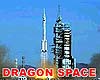
China will send at least two astronauts into outer space in the fall next year, and they will stay there for at least one week, reported Thursday's The Beijing News, citing Yang Jiachi, academician of the Chinese Academy of Sciences (CAS).
|
|
| |||||||||
| The content herein, unless otherwise known to be public domain, are Copyright 1995-2016 - Space Media Network. All websites are published in Australia and are solely subject to Australian law and governed by Fair Use principals for news reporting and research purposes. AFP, UPI and IANS news wire stories are copyright Agence France-Presse, United Press International and Indo-Asia News Service. ESA news reports are copyright European Space Agency. All NASA sourced material is public domain. Additional copyrights may apply in whole or part to other bona fide parties. Advertising does not imply endorsement, agreement or approval of any opinions, statements or information provided by Space Media Network on any Web page published or hosted by Space Media Network. Privacy Statement All images and articles appearing on Space Media Network have been edited or digitally altered in some way. Any requests to remove copyright material will be acted upon in a timely and appropriate manner. Any attempt to extort money from Space Media Network will be ignored and reported to Australian Law Enforcement Agencies as a potential case of financial fraud involving the use of a telephonic carriage device or postal service. |