|
 |
 |
 |
 |
 |
 |
 |
 |
 |

| . |  |
. |
New Structure Found Deep Within West Antarctic Ice Sheet
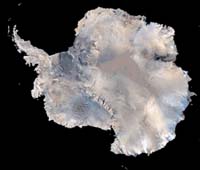
Scientists have found a remarkable new structure deep within the West Antarctic Ice Sheet which suggests that the whole ice sheet is more susceptible to future change than previously thought. The discovery, by scientists from Bristol University and the British Antarctic Survey in collaboration with US colleagues, is reported this week (September 24) in the international journal Science. The stability of the West Antarctic Ice Sheet has been hotly debated since the 1960s because of its potential to raise global sea level by around 5 m over several centuries. The potential impacts of a major change in the West Antarctic ice sheet are severe � sea level rise will be fantastically expensive for developed nations with coastal cities and dire for poor populations in low-lying coastal areas. Lead author Prof Martin Siegert of Bristol University said, 'There is a great deal of speculation that global warming may cause sea levels to rise due to the melting of ice sheets. Until now, scientific observations suggested that change to the West Antarctic Ice Sheet would be restricted to the edges implying that large-scale instability of the ice sheet is unlikely. This new discovery deep within the ice means that we need to re-think our current assessment of the risk of collapse of this ice sheet.' The structure - a distinctive fold in the ice, 800m deep by 50 km long - was detected using ice-penetrating radar. Ice sheets normally consist of flat layers of ice, so finding this huge fold was a complete surprise. Its presence suggests that a few thousand years ago surface ice at the centre of the ice sheet was moving rapidly and being 'drawn down' towards the bottom of the ice sheet. More recently the rate of the ice flow has changed from fast to slow. The direction of flow has also changed. The most likely explanation for these changes is the 'switching-off' of a large ice stream at the margin of the ice sheet several centuries ago. These changes imply that the centre of the ice sheet is more mobile than scientists previously realised, requiring them to rethink existing models. Related Links Bristol University SpaceDaily Search SpaceDaily Subscribe To SpaceDaily Express  Antarctic Glaciers Accelerating In Response To 2002 Ice Sheet Collapse
 Boulder CO (SPX) Sep 22, 2004
Glaciers in Antarctica's most rapidly warming region have quickened their pace following the collapse of a Delaware-sized ice shelf in March 2002, according to a new study led by the
|
|
| |||||||||
| The content herein, unless otherwise known to be public domain, are Copyright 1995-2016 - Space Media Network. All websites are published in Australia and are solely subject to Australian law and governed by Fair Use principals for news reporting and research purposes. AFP, UPI and IANS news wire stories are copyright Agence France-Presse, United Press International and Indo-Asia News Service. ESA news reports are copyright European Space Agency. All NASA sourced material is public domain. Additional copyrights may apply in whole or part to other bona fide parties. Advertising does not imply endorsement, agreement or approval of any opinions, statements or information provided by Space Media Network on any Web page published or hosted by Space Media Network. Privacy Statement All images and articles appearing on Space Media Network have been edited or digitally altered in some way. Any requests to remove copyright material will be acted upon in a timely and appropriate manner. Any attempt to extort money from Space Media Network will be ignored and reported to Australian Law Enforcement Agencies as a potential case of financial fraud involving the use of a telephonic carriage device or postal service. |