|
 |
 |
 |
 |
 |
 |
 |
 |
 |

| . |  |
. |
Counting Elephants From Space
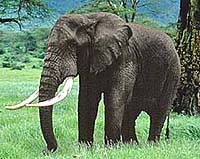
Scientists with the Bronx Zoo-based Wildlife Conservation Society (WCS) have recently been counting their zoo animals from a lofty perch: namely, outer space. Using high-tech cameras fixed to an orbiting satellite 280 miles overhead, a WCS scientific team tallied some of the zoo's own animal collection to see if satellites can help count wildlife populations in remote locations throughout the world. The WCS team is currently analyzing high-tech maps produced by the satellite, which orbited the zoo last Wednesday, Nov. 10th. So far, everything from giraffes to Thomson's gazelles have been spotted with startling clarity. If the technology proves accurate, WCS is hopeful that it can be used to monitor endangered wildlife populations that live in hard-to-reach locations. Dr. Eric Sanderson, a WCS landscape ecologist who is managing the study said, "Imagine being able to monitor a herd of elephants in the Serengeti, or a flock of endangered flamingos in Bolivia, from a lab in New York." "This technology may allow us to do just that. This experiment is another powerful example of how WCS can use its world-class zoos in New York City to help save wildlife living half a world away," said Richard L. Lattis, General Director of WCS's zoos and aquarium. The satellite, called Quickbird, is owned by DigitalGlobe, a private company. WCS plans to use similar imagery to count wildlife in exotic locations, including elephants and giraffes in Tanzania, flamingos in South America, and elk, bison and antelope in Wyoming. WCS scientists will analyze those images as well to compare counts of wildlife living in other wild places. The project was funded in part by a grant from NASA. According to members of Dr. Sanderson's team, the detail of the images taken from so far away has been particularly impressive. "We're counting individual gazelles in the zoo's African Plains exhibit from a satellite 280 miles up," said Dr. Scott Bergen. "That's like standing on top of the Empire State Building and spotting a deer in Maine." Related Links Wildlife Conservation Society SpaceDaily Search SpaceDaily Subscribe To SpaceDaily Express  ISRO And CNES Sign MOU On Megha-Tropiques Satellite Mission
 Antariksh Bhavan, Bangalore (SPX) Nov 16, 2004
ISRO and the French National Space Centre (CNES) signed a Memorandum of Understanding (MOU) last Friday (November 12) to proceed with the development and implementation of the joint atmospheric satellite mission, Megha-Tropiques.
|
|
| |||||||||
| The content herein, unless otherwise known to be public domain, are Copyright 1995-2016 - Space Media Network. All websites are published in Australia and are solely subject to Australian law and governed by Fair Use principals for news reporting and research purposes. AFP, UPI and IANS news wire stories are copyright Agence France-Presse, United Press International and Indo-Asia News Service. ESA news reports are copyright European Space Agency. All NASA sourced material is public domain. Additional copyrights may apply in whole or part to other bona fide parties. Advertising does not imply endorsement, agreement or approval of any opinions, statements or information provided by Space Media Network on any Web page published or hosted by Space Media Network. Privacy Statement All images and articles appearing on Space Media Network have been edited or digitally altered in some way. Any requests to remove copyright material will be acted upon in a timely and appropriate manner. Any attempt to extort money from Space Media Network will be ignored and reported to Australian Law Enforcement Agencies as a potential case of financial fraud involving the use of a telephonic carriage device or postal service. |