|
 |
 |
 |
 |
 |
 |
 |
 |
 |

| . |  |
. |
The Need For Advanced Solutions In Aviation Security
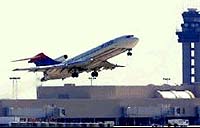
Confronted with the growing demand to provide citizens with greater security without imposing on their personal liberty, the U.S. Transportation Security Administration (TSA) has been investing extensively into R&D for aviation technologies. Many airports around the world are using biometric measurement technologies to determine the identity of air travelers. Besides being extremely accurate, it is also much faster than other traditional, long drawn out procedures that involve a much greater degree of human intervention. A few of these programs are already underway at some international airports. Though each of them has been specifically designed to meet varying needs, they share certain common characteristics. At the most basic level, the passenger would have to enroll in a program where his biometric measurement is stored on a database or engraved on a card. This would serve as an identification card for future reference. To enter an airport the passenger would need to insert this card into a machine, and answer touch screen questions. The final confirmation occurs when the cardholder directs his eye into an iris scanner that compares the image of his iris with the template engraved on the ID card. "Biometric identification methods have also been incorporated into passports. Identifying fake or stolen passports has always been a source of concern among security officials," says Michael Valenti, Technical Insights Analyst. "But biometric passports that are durable, highly secure, and can be easily read by machines have alleviated fears of tampering and foul play." Even while biometric techniques play an integral role in identifying impersonators, another aspect that is increasingly being scrutinized by the authorities is explosive detection. Intelligent imaging solutions that are capable of integrating standard baggage and screening procedures with explosive detection systems (EDS), have reduced the number of "false positive" alarms. It has also minimized the need for human intervention. Technologies such as Computed Tomography (CT) take cross sectional X-rays images of the luggage, and send it to an on-board computer. The images are then analyzed and their properties compared to those of known explosives. If a match is found, alarms are immediately activated. Yet another threat facing commercial airlines today are Man-Portable Air Defense Systems (MANPADS) that are shoulder-fired rockets or missiles that are designed to bring down combat aircraft by the infantry. To counter the availability of these systems on the international black market, the U.S. Department of Homeland Security (DHS) has been working in liaison with private sector participants. "It is likely that the information from private participants will help modify commercial aircraft while minimizing the disruption and maintenance downtime to air carriers," concludes Valenti. Related Links The U.S. TSA SpaceDaily Search SpaceDaily Subscribe To SpaceDaily Express  NASA To Award Contract For Aerospace Testing
 Moffett Field CA - Jun 03, 2004
NASA Ames Research Center will award a contract valued at more than $48 million to Jacobs Sverdrup of Tullahoma, Tennessee. The cost-plus-incentive-fee/award fee, performance-based contract will provide a wide range of support services for aerospace testing and facilities maintenance and operations at NASA Ames.
|
|
| |||||||||
| The content herein, unless otherwise known to be public domain, are Copyright 1995-2016 - Space Media Network. All websites are published in Australia and are solely subject to Australian law and governed by Fair Use principals for news reporting and research purposes. AFP, UPI and IANS news wire stories are copyright Agence France-Presse, United Press International and Indo-Asia News Service. ESA news reports are copyright European Space Agency. All NASA sourced material is public domain. Additional copyrights may apply in whole or part to other bona fide parties. Advertising does not imply endorsement, agreement or approval of any opinions, statements or information provided by Space Media Network on any Web page published or hosted by Space Media Network. Privacy Statement All images and articles appearing on Space Media Network have been edited or digitally altered in some way. Any requests to remove copyright material will be acted upon in a timely and appropriate manner. Any attempt to extort money from Space Media Network will be ignored and reported to Australian Law Enforcement Agencies as a potential case of financial fraud involving the use of a telephonic carriage device or postal service. |