
Watch
Space Daily on YouTube
The sky is being privatised and divided - before anyone got a vote. Deeply reported films on who is quietly claiming low orbit, the radio spectrum, and the Moon, and what that land-grab costs the rest of us on the ground.
Latest
All articles →
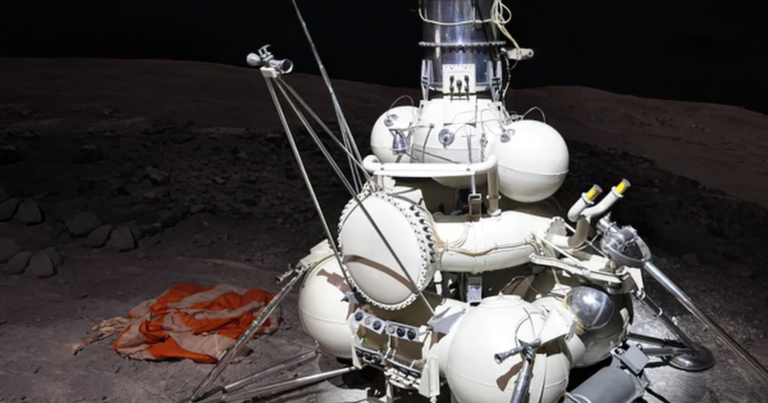
We tend to imagine the Moon as a barren, resourceless rock, but the permanently shadowed craters near its south pole hold something future astronauts may prize more than gold: water ice, confirmed by NASA missions, that could one day be split into oxygen to breathe and hydrogen for rocket fuel.
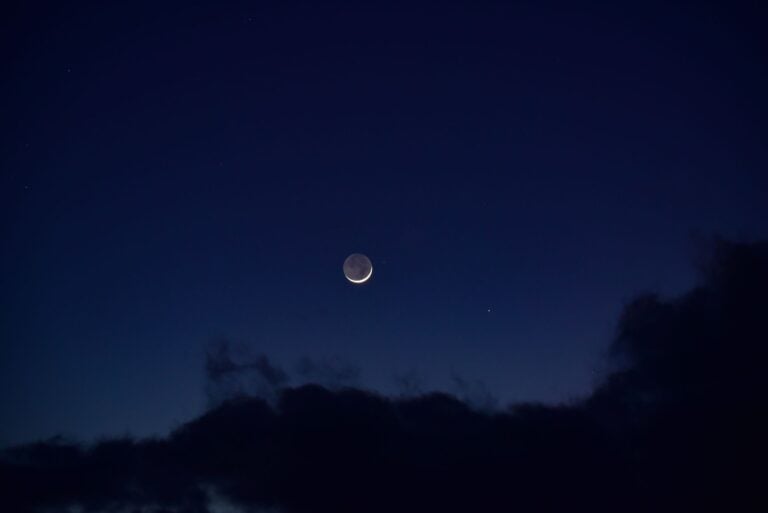
The Moon is easy to misread from Earth. It looks dry, grey, and inert, a world of dust and stone with no rivers, clouds, or blue trace of atmosphere.

In one drilled Martian rock, Curiosity found 21 organic molecules — seven never before detected on Mars — including a nitrogen-bearing ring structure that belongs to the same chemical family as precursors to RNA and DNA.
The most interesting thing about the new Curiosity result is not simply that Mars has organic molecules.
What’s up in
Mind & Meaning
The psychology of ambition, isolation, and meaning under extremes — and what frontier life teaches us about being human.

In July 2025, a planetary-defence telescope in Chile built to watch for dangerous asteroids accidentally became the instrument that discovered only the third interstellar object ever seen — a comet now thought to be older than the solar system, sweeping through on a path it will never repeat.

On 28 September 1969, a fireball broke apart over a small Victorian farming town called Murchison and scattered black, carbon-rich rocks across the paddocks — and those rocks turned out to contain grains of stardust formed 7 billion years ago, older than the Sun, older than Earth, and the oldest solid material any human has ever held

A moon only 10 kilometres wide was hiding around Uranus for decades. Voyager 2 missed it. Hubble missed it. But in 2025, Webb finally caught the faint speck circling near the planet’s inner rings, raising Uranus’s known moon count to 29.

We tend to imagine the Moon as a barren, resourceless rock, but the permanently shadowed craters near its south pole hold something future astronauts may prize more than gold: water ice, confirmed by NASA missions, that could one day be split into oxygen to breathe and hydrogen for rocket fuel.
What’s up in
Science
Physics, climate, planetary science, and the research that shapes how we understand the universe.

In July 2025, a planetary-defence telescope in Chile built to watch for dangerous asteroids accidentally became the instrument that discovered only the third interstellar object ever seen — a comet now thought to be older than the solar system, sweeping through on a path it will never repeat.

On 28 September 1969, a fireball broke apart over a small Victorian farming town called Murchison and scattered black, carbon-rich rocks across the paddocks — and those rocks turned out to contain grains of stardust formed 7 billion years ago, older than the Sun, older than Earth, and the oldest solid material any human has ever held

We tend to imagine the Moon as a barren, resourceless rock, but the permanently shadowed craters near its south pole hold something future astronauts may prize more than gold: water ice, confirmed by NASA missions, that could one day be split into oxygen to breathe and hydrogen for rocket fuel.

In one drilled Martian rock, Curiosity found 21 organic molecules — seven never before detected on Mars — including a nitrogen-bearing ring structure that belongs to the same chemical family as precursors to RNA and DNA.
About Space Daily
Space, science, and the human side of the frontier. Since 1995.
Space Daily is an independent publication covering three connected beats: the space industry, the science behind it, and the psychology of ambition, isolation, and meaning under extremes. Founded in Tokyo in 1995, we’ve built a thirty-year archive of rigorous reporting on the people, missions, and ideas pushing humanity outward — and on the human dynamics shaped by frontier life. The same ambitions, pressures, and patterns of mind that drive humanity to the stars also shape how we live on Earth. We employ modern AI technologies to support our editorial workflows; every published piece is editorially directed and reviewed.
More about us →